
Moon Phase Sendai
On Sunday, October 11, 2026, the moon in Sendai is a New Moon with 0% illumination. Moon age: 0.4 days.
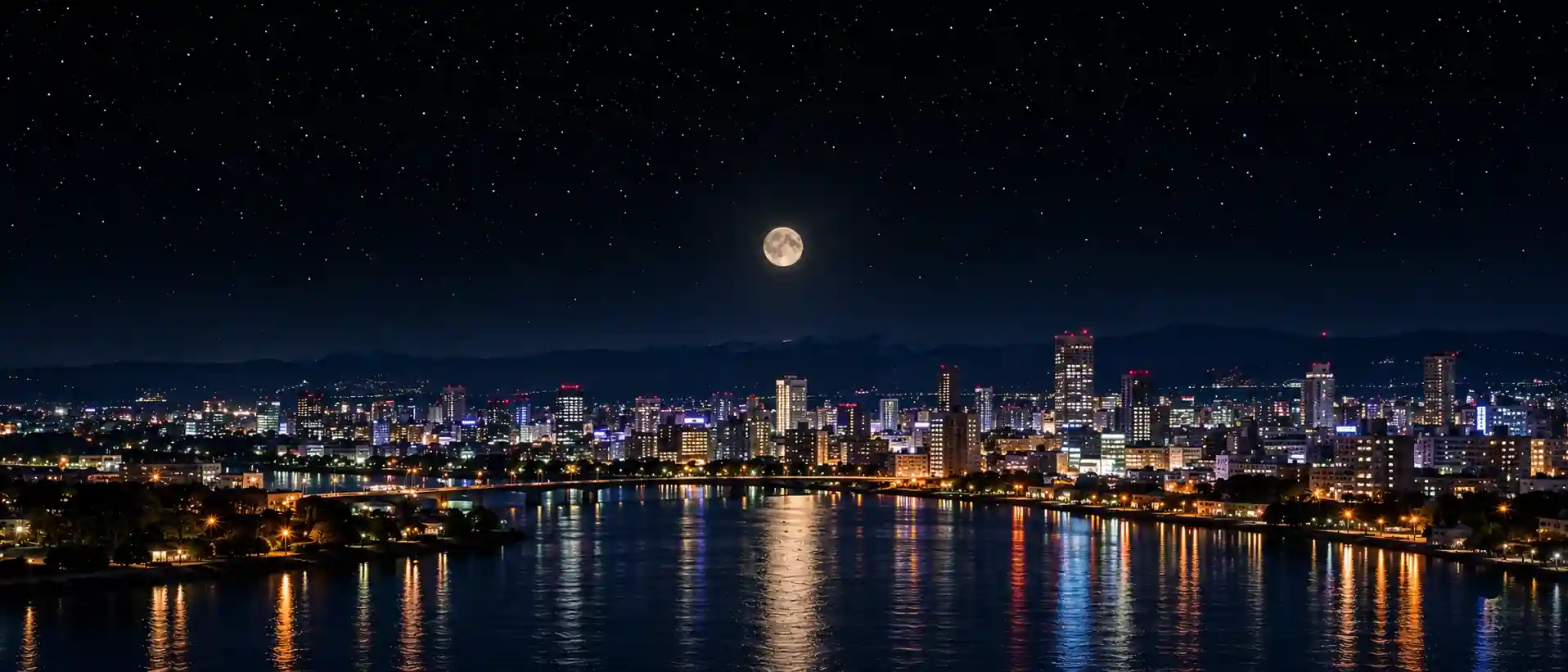
☽ Best Places to View the Moon in Sendai, Japan
Sendai sits at roughly 38.27°N in the Tōhoku region of northern Honshu, the largest city in Tōhoku with around 1.1 million residents. Established as a castle town by the daimyō Date Masamune around 1600–1601, the city is nicknamed "the City of Trees" for its lush greenery and famous zelkova-lined avenues, part of a long tradition of urban tree planting, and its coastal areas were struck hard by the 2011 Tōhoku earthquake and tsunami. Between a hilltop castle ruin, a richly decorated mausoleum in a cedar forest, and the tree-lined streets that give the city its nickname, Sendai offers a genuinely varied set of places to watch the moon.
Aoba Castle Ruins (Aobayama Park)
The hilltop site of Date Masamune's castle, using the Hirose River and surrounding cliffs as natural defenses. Now maintained as a park with preserved stonework, reconstructed elements, and a statue of Masamune, its stone walls and statue are illuminated from sunset until 23:00, making it a genuine, well-documented night-view spot looking out over the river and the city below.
Zuihoden Mausoleum
The mausoleum of Date Masamune, rebuilt after the original was destroyed in the 1945 air raid on Sendai, richly decorated in black, gold, and vibrant colour and set among towering cedars. Normal hours end in the mid-to-late afternoon, but its August "Zuihoden Tanabata Night" event brings scheduled evening illumination to the grounds during the Sendai Tanabata Festival — check current dates before planning a nighttime visit.
Jōzenji-dori Avenue
A zelkova-lined boulevard through the centre of the city, the clearest expression of Sendai's "City of Trees" nickname, with a central promenade about 700 metres long. Much of the city's historic greenery was lost in World War II air raids, and today's avenue was replanted afterward as part of that legacy; in December it hosts the Pageant of Starlight, when hundreds of thousands of lights fill the trees for most of the month.
Hirose River
The river that curls around the base of Aoba Castle's hill, historically forming part of the castle's natural defences. Its banks can provide an open, low-horizon view of the water beneath the wooded castle hill, a quieter counterpoint to the elevated, illuminated view from the ruins above.
Osaki Hachimangu Shrine
A shrine built by Date Masamune in 1607 and now a designated National Treasure. Its exterior and approach offer a quieter architectural setting than the castle or central avenues, though as with any shrine, check current access before planning a late visit.
Akiu Ōtaki Falls
A waterfall on the upper reaches of the Natori River within Sendai's wider municipal area, about 6 metres wide with a 55-metre drop, and listed among Japan's Top 100 Waterfalls. It's a scenic option for those willing to make a separate trip into Sendai's western hills, rather than an easy add-on to a central evening.
◉ Best Times for Moon Photography
📷 Quick Photography Tips
Sendai runs on Japan Standard Time (UTC+9) year-round — Japan does not observe daylight saving time, so the offset from UTC stays the same in every season.
For the moon phase in any other city worldwide, visit our Dynamic Moon Phase Calculator for instant lunar data tailored to wherever you are.
The moon phase today in Sendai, Japan is shown in detail above — complete with exact illumination percentage, moonrise/set times, and the best viewpoints to see it. For the moon phase today in any other city or location worldwide, visit our Dynamic Moon Phase Calculator on the home page.
◐ While Actually There
Sendai's nickname isn't just marketing, even if its most visible expression is younger than it looks. Date Masamune really did encourage his retainers to plant trees around their properties, but much of that early greenery was lost in World War II air raids. Sendai's long tradition of urban tree planting still shapes the modern city, most visibly along Jōzenji-dori, whose zelkova canopy was planted as part of the city's postwar rebuilding — a newer layer of the same old habit, still doing the same job four centuries later.
Up on the hill above the Hirose River, Aoba Castle's ruins tell a related story. Much of the surviving castle architecture was lost through fire and wartime destruction; today the site is marked by preserved stonework, reconstructed elements, and the well-known Masamune statue, illuminated at night in a way few of Sendai's other historic sites are. Zuihoden, Masamune's mausoleum in the cedar forest nearby, went through a similar cycle of destruction and reconstruction, and its riot of colour today stands in deliberate contrast to the quieter shrine architecture found elsewhere in Japan — though it's best visited by day, or during its scheduled August evening event.
The castle ruins, the river, and Jōzenji-dori are all straightforward for an ordinary evening. Akiu Ōtaki Falls is worth the extra trip if you have more time, but it's a separate excursion into Sendai's western hills rather than an easy add-on.
"Sendai's long tradition of urban tree planting gives the modern city a distinctive green character — and Jōzenji-dori puts that canopy directly beneath the moon."
✓ Your Sendai Moon Chase Checklist
Before You Go
- Check the moonrise time and phase on this page for each night of your stay
- Check current dates for Zuihoden's Tanabata Night if visiting in August and hoping to see the scheduled evening illumination
- Check the current December dates for the Pageant of Starlight if you want to see Jōzenji-dori's illuminated trees
- Check current access and any VR experience hours at Aoba Castle Ruins if you want to combine that with your visit
- Check the forecast for snow or icy conditions if visiting between December and February
What to Bring
- Warm winter clothing for December–February, including gloves and a good outer layer
- A tripod, useful at open, elevated spots like Aoba Castle Ruins
- Sturdy footwear for potentially icy paths in winter, especially around the castle hill
- A light rain layer, especially during the June rainy season
- Spare camera batteries kept warm in an inner pocket during cold-weather sessions
On the Night
- Arrive 20–30 minutes before moonrise at open spots like the Hirose River or Aoba Castle Ruins
- Mind potentially icy paths and stairs around the castle hill in winter
- Shoot RAW and bracket exposures, especially where Jōzenji-dori's lights or the illuminated Aoba Castle site mix with moonlight; use Zuihoden's colourful architecture for daytime or scheduled nighttime events
- Confirm your return transport if visiting Akiu Ōtaki Falls in the evening, since it's further from the centre than the other spots
- Watch for typhoon-related weather changes if visiting between summer and early autumn
? Sendai Moon Phase — Frequently Asked Questions
Q. What is the moon phase today in Sendai?
The moon phase today in Sendai is a New Moon with 0% illumination. The next full moon is in 16 days, on Oct 26. Moonrise is at 6:11 AM and moonset at 5:08 PM.
Q. Where is the best place to view the moon in Sendai?
The Aoba Castle Ruins in Aobayama Park are the best-documented night-view spot, with the stone walls and the Masamune statue illuminated from sunset until 23:00 and a view over the Hirose River and the city below. The Hirose River's banks give an open, low-horizon view of the water beneath the wooded castle hill, while Jōzenji-dori, the zelkova-lined avenue through the centre, gives a tree-canopy foreground, especially in December. Osaki Hachimangu Shrine offers a quieter architectural setting, and Zuihoden Mausoleum is best visited by day or during its scheduled August evening event. Akiu Ōtaki Falls is a separate trip into the western hills.
Q. Where does the moon rise and set in Sendai, and how high does it climb?
At about 38.3°N, Sendai's moonrise and moonset points swing across the horizon each month, from roughly east-northeast to east-southeast for rising and west-northwest to west-southwest for setting. A winter full moon culminates high in the south, at roughly 75° above the horizon, while a summer full moon stays lower, peaking near 28°. Sendai's coastal plain and the Pacific lie to the east, the direction of moonrise, so from the elevated castle ruins a rising moon comes up over the city and the plain, while a setting moon drops toward the western hills, where Akiu lies. Check the azimuth for your date and exact spot.
Q. Is light pollution a problem for moon observing in Sendai?
The moon is bright enough to observe and photograph from almost anywhere in Sendai, so light pollution rarely limits the lunar disc itself. It does wash out earthshine on a thin crescent and any faint sky detail. The city centre, the illuminated castle site and Jōzenji-dori all carry substantial artificial lighting, so central Sendai is a light-polluted site rather than a dark-sky one. In December the Pageant of Starlight fills the avenue's trees with hundreds of thousands of lights for most of the month, adding still more.
Q. What camera settings and phases work best for moon photography in Sendai?
For a full moon, start with Looney 11 (f/11, ISO 100, 1/100 s) and refine using your histogram, since it is a baseline rather than a guarantee. The moon is much brighter than the illuminated castle site and city lights, so shoot RAW and bracket or blend exposures to keep both crater detail and the foreground. A waxing gibbous is useful for blue hour from the castle ruins while the foreground is still lit, and a full moon rises around sunset in the east. A 200–400 mm lens helps isolate the moon against the city skyline, with a tripod for bracketing and manual focus on the moon using magnified live view.
Q. How do winter snow and the rainy season affect moon viewing in Sendai?
Sendai has cold winters with regular snowfall, sometimes substantial, so cloud and snow can close a lunar window, and paths and stairs around the castle hill can be icy. Cold drains camera batteries quickly, so carry spares in an inner pocket and swap them rather than waiting for one to die. Summers are warm and humid, with a rainy season in June and typhoon risk from summer into early autumn, and humidity can leave condensation on lenses. Check local forecasts for cloud, snow and typhoon activity before heading out.
Q. What time zone are Sendai's moonrise and moonset times shown in?
Sendai runs on Japan Standard Time, UTC+9, year-round. Japan does not observe daylight saving time, so moonrise and moonset times stay on the same local clock in every season and the offset from UTC never changes.
Q. Can I shoot the moon at Sendai's viewpoints after dark?
Access varies by site. The Aoba Castle Ruins are illuminated from sunset until 23:00, but check current access and any VR experience hours if you want to combine them with your visit. Zuihoden's normal hours end in the mid-to-late afternoon, with scheduled evening illumination only during its August Tanabata Night, so check the current dates. Check current access for Osaki Hachimangu Shrine before a late visit, and confirm return transport if you go out to Akiu Ōtaki Falls, since it is further from the centre. In winter, mind icy paths and stairs around the castle hill.
Q. Does this page work for cities besides Sendai?
This page is set up specifically for Sendai, Japan. For the moon phase in any other city or location worldwide, use the Dynamic Moon Phase Calculator on the moonphase.today home page.
✦ Explore Further
Moon Phase Today: Niigata
Check tonight's moon phase in Niigata, west of Sendai across the mountains on the Sea of Japan coast.
🌸Moon Phase Today: Saitama
See the moon over Saitama, south of Sendai on the Kantō Plain.
🇯🇵Moon Phase in Japan
Browse moon phase pages for cities across Japan, from Sapporo to Kagoshima.
🌍World Moon Phase Directory
Find the moon phase, rise and set times for cities in every region of the world.
Moon Conjunctions & Occultations
See when the moon passes close to planets and bright stars, and when it covers them, for a night at Aoba Castle.