
Moon Phase Today San José
On Friday, October 9, 2026, the moon in San José is a New Moon with 0% illumination. Moon age: 28.9 days.
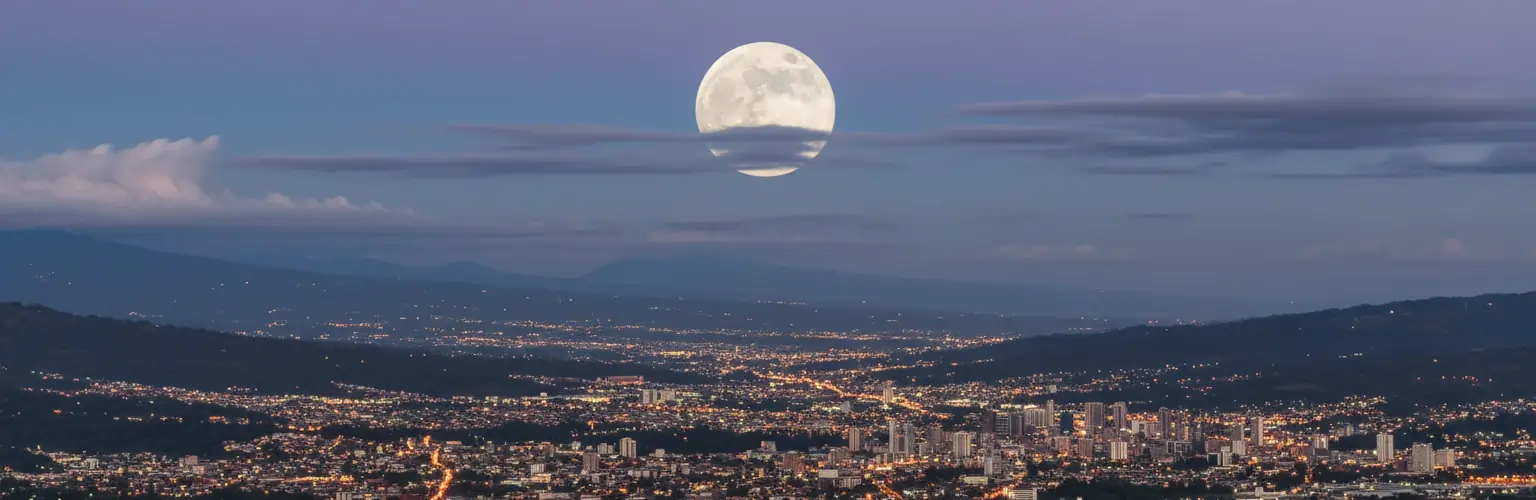
☽ Best Places to View the Moon in San José, Costa Rica
San José sits in a high central valley (~1,170 m) surrounded by volcanoes and mountains, creating crisp, elevated moonrises — especially from hills where the moon rises over the city lights with Poás or Barva volcanoes in silhouette. All spots below are free and accessible 24/7 unless noted.
Cerro de la Muerte – Route 2, km 50–60
The #1 San José moonrise viewpoint. High mountain pass (~3,300 m) south of the city on the Pan-American Highway; the moon rises over the Central Valley and distant city glow — stunning panoramic with pine forests and cloud forest in the foreground. Drive-up pullouts; very dark skies.
Barva Volcano Foothills – Heredia Viewpoints
Northern foothills of Barva Volcano (~2,000 m). The moon rises over the Central Valley and the full spread of San José lights below — darker skies than the city with coffee farm terraces as foreground. Short drive north from the city; combine with a visit to Café Britt for context.
Braulio Carrillo – Zurquí Viewpoint
Northern national park entrance (~1,500 m). The moon rises over the valley with San José's distant glow — lush cloud rainforest framing and cooler mountain air. Short trails from the car park; a dramatic contrast of city light and jungle silhouette.
Escazú Hills – Western Suburb Viewpoints
Western suburb hills with the moon rising over the full city bowl and distant volcanoes — open panoramic vistas from upscale residential roads. Drive-up spots accessible by car; best on clear dry-season evenings when Poás and Irazú are visible in silhouette.
La Sabana Metropolitan Park
Central urban park with open eastern views. The moon rises over the city lights with reflections in the park lake and the National Museum of Costa Rica as foreground. Easily accessible; a convenient no-drive option for city-based visitors.
UCR Campus – Rodrigo Facio Rooftops
University of Costa Rica campus with elevated open areas and rooftop access. The moon rises over the San José city bowl — urban framing with a relaxed student atmosphere. Open areas free to access; best from the upper campus terraces facing north.
◉ Best Times for Moon Photography
📷 Quick Photography Tips
San José operates on CST (UTC−6) year-round with no daylight saving time. Apps like PhotoPills or Stellarium handle the offset automatically when you set your location to San José.
For the moon phase in any other city worldwide, visit our Dynamic Moon Phase Calculator for instant lunar data tailored to wherever you are.
The moon phase today in San José, Costa Rica is shown in detail above — complete with exact illumination percentage, moonrise/set times, and the best local spots to see it. For the moon phase today in any other city or location worldwide, visit our Dynamic Moon Phase Calculator on the home page.
? San José Moon Phase — Frequently Asked Questions
Q. What is the moon phase today in San José?
The moon phase today in San José is a New Moon with 0% illumination. The next full moon is in 17 days, on Oct 25. Moonrise is at 4:33 AM and moonset at 4:50 PM.
Q. Where is the best place to view the moon in San José?
Cerro de la Muerte, the high mountain pass south of the city, gives the most dramatic panorama, with the moon rising over the whole Central Valley from around 3,300 metres. The Escazú Hills west of the city offer an easier drive-up option with volcano silhouettes on clear evenings, and La Sabana Metropolitan Park is the simplest choice if you're staying downtown and don't want to drive, alongside the Barva Volcano foothills and Braulio Carrillo's Zurquí viewpoint.
Q. Why does the moon look so crisp over San José?
San José sits in a high central valley at roughly 1,170 metres, ringed by volcanoes and mountains, so getting even a short drive out of the city puts you well above the haze that sits over the valley floor. At just under 10° N, the moon also climbs on a fairly steep arc, and during the dry season the surrounding peaks — Poás, Barva, Irazú — often show up in silhouette against it.
Q. Does San José observe daylight saving time?
No. Costa Rica stays on Central Standard Time (UTC−6) year-round and does not observe daylight saving time. The times shown on this page never need a seasonal adjustment.
Q. What's the best time of year for moon photography in San José?
December through April is the dry season and gives the clearest skies and lowest humidity, which is when the volcano silhouettes from Escazú and Cerro de la Muerte come through sharpest. Whatever the season, dress warmly if you're heading up to Cerro de la Muerte, since it's cold up there even when the valley floor is mild.
Q. Does this page work for cities besides San José?
This page is set up specifically for San José, Costa Rica. For the moon phase in any other city or location worldwide, use the Dynamic Moon Phase Calculator on the moonphase.today home page.
✦ Explore Further
Moon Phase Today: Panama City
Check tonight's moon phase in Panama City, about 340 miles east.
📷Moon Photography Guide
Camera settings, lenses, and techniques for shooting sharp, well-exposed moon shots.
🌋Sky Clarity Forecast
Check conditions before heading to Escazú or Cerro de la Muerte for volcano silhouettes.
🔭Photography Field of View Calculator
Work out the focal length you'll need to compress the moon against Poás or Barva.
NASA Moon Phase & Libration Gallery
NASA's Scientific Visualization Studio's daily renders of the moon's exact phase, libration, and orientation, straight from official mission data.