
Moon Phase Today Mesa
On Friday, October 9, 2026, the moon in Mesa is a New Moon with 0% illumination. Moon age: 29.0 days.
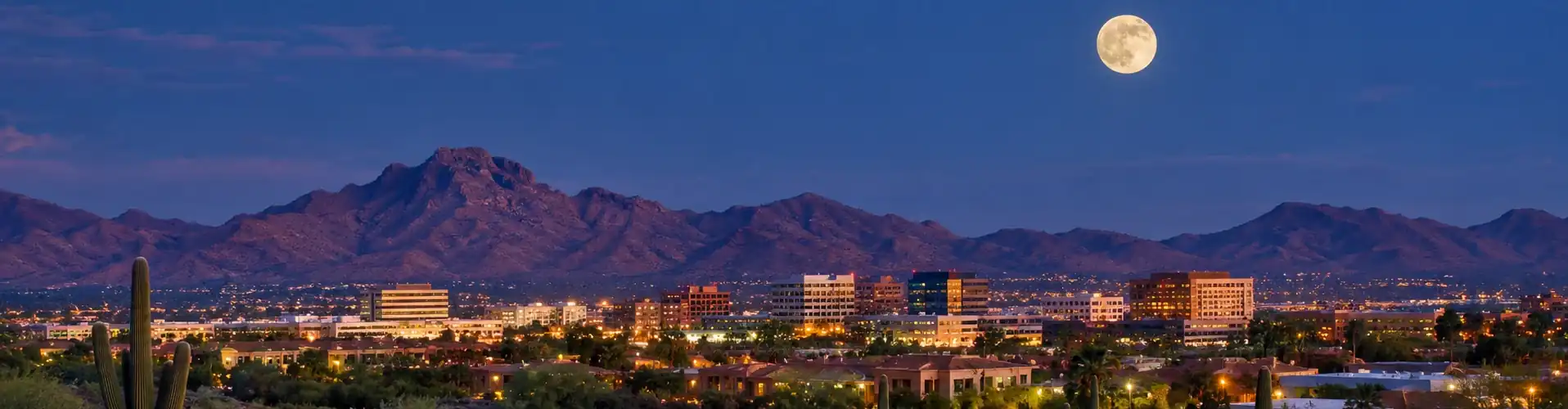
☽ Best Places to View the Moon in Mesa, AZ
Mesa sits in the East Valley of the Phoenix metro, with the Tonto National Forest and the Superstition Wilderness lying just north and east of the city — a genuine advantage over most cities this size, since real desert terrain and wild horse country start just past the edge of the suburbs. Downtown Mesa offers a walkable historic core, while the city's lake parks and a nearby regional park give a range of options in between. As always, the moon's exact rise time and direction shift with the date and your observing location, so it's worth checking both against whichever park or trailhead you're planning around. Here are six useful moon-viewing options in the area, each suited to a different kind of visit.
Usery Mountain Regional Park
A roughly 3,648-acre Maricopa County park on the city's northeast edge, with 29 miles of trails, the popular Wind Cave hike, a campground, and stargazing programs that have brought telescopes out for public viewing nights. Camping is available, and a day-use entrance fee applies — check the current Maricopa County Parks page for today's hours and fee before visiting. Address: 3939 N Usery Pass Rd.
Red Mountain Park
Mesa's largest park at 1,146.3 acres, built around an 8-acre fishing lake with a paved path circling the water, sports fields, and desert habitat along the shore. Free to visit. Open sunrise to 10 p.m. Address: 7745 E Brown Rd.
Riverview Park
A lakefront park next to Sloan Park (the Chicago Cubs' spring training stadium), with a fishing lake, a splash pad, playgrounds, and a suspension bridge. Free to visit. Open 6 a.m.–10 p.m. Address: 2100 W Rio Salado Pkwy.
Pioneer Park
A historic 17.8-acre downtown park across from the Mesa Arizona Temple, with a restored locomotive, treehouse play structures, and a 500-foot suspension bridge. Free to visit. Open sunrise to 10 p.m. Address: 526 E Main St.
Water Users Recreation Site (Lower Salt River)
A Tonto National Forest recreation site on the Lower Salt River, about 19 miles northeast of Mesa, with desert and riparian scenery and a well-known chance of spotting the area's wild horses along the water — sightings are unpredictable, but the river is one of the more reliable places to see them. A Tonto Daily Pass (around $8/vehicle) is required for parking; check current Forest Service alerts, access conditions, and recreation rules before visiting. Address: 9200 N Bush Hwy.
Downtown Mesa / Mesa Arts Center Plaza
The walkable core of downtown Mesa along Main Street, anchored by the Mesa Arts Center's public plaza and connected to the rest of the Valley by light rail. A mix of restaurants, bars, and breweries line Main Street, with hours varying by venue. Address: Main St & Center St.
◉ Best Times for Moon Photography
📷 Quick Photography Tips
Mesa runs on Arizona time — Mountain Standard Time (UTC−7) year-round, since Arizona (outside the Navajo Nation) doesn't observe daylight saving time. PhotoPills or Stellarium will handle the moon's exact rise azimuth for any of these spots automatically.
The moon phase today in Mesa is shown in detail above — complete with exact illumination percentage, moonrise/set times, and the best local spots to see it. For the moon phase today in any other city worldwide, visit our Dynamic Moon Phase Calculator on the home page.
◐ What the Experience Actually Feels Like
Usery Mountain draws day hikers on the Wind Cave Trail and campers settling in for the evening, and stargazing programs have brought telescopes out to the park for public viewing nights in the past — check current listings if you'd like to combine a visit with an organized event.
Pioneer Park is a genuinely public, family-oriented space with hours running to 10 p.m. — the historic locomotive and treehouse structures sit near downtown Mesa's low-rise skyline and the Mesa Arizona Temple.
The Water Users site on the Salt River is a different experience from any city park: real desert and riparian terrain, with a well-known chance — though never a guarantee — of spotting wild horses along the water. A Tonto Daily Pass is required, and current access rules are worth checking before you go.
"The Water Users site on the Salt River is a different experience from any city park — real desert and riparian terrain, with a well-known chance, though never a guarantee, of spotting wild horses along the water."
✓ Your Mesa Moon Chase Checklist
Before You Go
- Check the moon's rise time and azimuth for your date and observing location — alignment with the Superstition Mountains, a lake, or a downtown landmark depends on both
- Check both the moon's rise time and each site's current hours — check the Maricopa County Parks page for Usery Mountain's current hours and fee, and check current Forest Service alerts and access conditions for the Water Users site before planning a visit
- Verify Site Access: a Tonto Pass is required to park at Water Users and other Salt River recreation sites — purchase one in advance or on-site
- Use PhotoPills or Stellarium to check whether the moon will align with a specific landmark on your date
- Check for monsoon dust storms and thunderstorms from July through September, in addition to the general forecast
- Bring cash or a card for Usery Mountain's day-use fee, since the city parks on this list are free
What to Bring
- A telephoto lens — 200mm or longer can be useful when you want a relatively large moon beside a distant landmark, depending on your shooting distance
- Water and sun protection for Usery Mountain's trails or the Salt River's exposed banks
- A remote shutter release or a 2-second timer to avoid shake on tripod shots, where tripods are permitted
- If you're planning to camp at Usery Mountain, make a reservation or check current site availability in advance
- Binoculars if you're hoping to spot the Salt River wild horses from a respectful distance
On the Night
- Arrive at least 30–45 minutes early when photographing downtown or during a scheduled star party
- Focus manually on the moon's edge — park lighting and city glow can confuse autofocus at dusk
- Bracket your exposures — one for the bright lunar disc, one for the darker desert or lake below
- If the moon looks soft or hazy right at moonrise, consider waiting until it climbs higher above the horizon; the longer path through the atmosphere at low altitude increases scattering and distortion
- At Red Mountain Park, Riverview Park, or Pioneer Park, plan around each site's current posted hours rather than assuming late-night access
? Mesa Moon Phase — Frequently Asked Questions
Q. What is the moon phase today in Mesa?
The moon phase today in Mesa is a New Moon with 0% illumination. The next full moon is in 17 days, on Oct 25. Moonrise is at 5:35 AM and moonset at 5:30 PM.
Q. Where is the best place to view the moon in Mesa?
Usery Mountain Regional Park is the standout spot, a roughly 3,648-acre county park on the city's northeast edge with 29 miles of trails and stargazing programs that bring out telescopes for public viewing nights. Red Mountain Park and Riverview Park both give a lakefront setting within the city, Pioneer Park offers a historic downtown option across from the Mesa Arizona Temple, and the Water Users Recreation Site on the Lower Salt River or Downtown Mesa's Main Street add further desert-and-wild-horse or walkable-nightlife alternatives.
Q. Do these viewing spots stay open after dark?
Most of the city parks do — Red Mountain Park and Pioneer Park are both open sunrise to 10 p.m., and Riverview Park runs 6 a.m. to 10 p.m. Usery Mountain Regional Park charges a day-use entrance fee and its hours are worth checking directly on the Maricopa County Parks page, and the Water Users Recreation Site requires a Tonto Daily Pass, so it's worth checking current Forest Service alerts and access conditions before a visit.
Q. Does Mesa observe daylight saving time?
No. Mesa operates on MST (Mountain Standard Time, UTC−7) year-round — Arizona does not observe daylight saving time. The times shown on this page never need a seasonal adjustment.
Q. What's the best time of year for moon photography in Mesa?
The moon's rise time and direction shift with the date and your observing location rather than following a fixed seasonal pattern, so alignment with the Superstition Mountains or a specific park depends on the exact night. Whatever the date, it's worth checking for monsoon dust storms and thunderstorms from July through September, in addition to the general forecast.
Q. Does this page work for cities besides Mesa?
This page is set up specifically for Mesa, Arizona. For the moon phase in any other city or location worldwide, use the Dynamic Moon Phase Calculator on the moonphase.today home page.
✦ Explore Further
Moon Phase Today: Phoenix
Check tonight's moon phase in Phoenix, right next door in the same valley.
📷Moon Photography Guide
Camera settings, lenses, and techniques for shooting sharp, well-exposed moon shots.
📐Looney 11 Exposure Calculator
Dial in the exact f-stop, ISO, and shutter speed for a full moon over the Superstitions.
🌙Why Does the Moon Rise and Set?
The simple science behind why the rising time and direction shift night to night.
NASA Moon Phase & Libration Gallery
NASA's Scientific Visualization Studio's daily renders of the moon's exact phase, libration, and orientation, straight from official mission data.