
Moon Phase Today Aurora
On Friday, October 9, 2026, the moon in Aurora is a New Moon with 0% illumination. Moon age: 29.0 days.
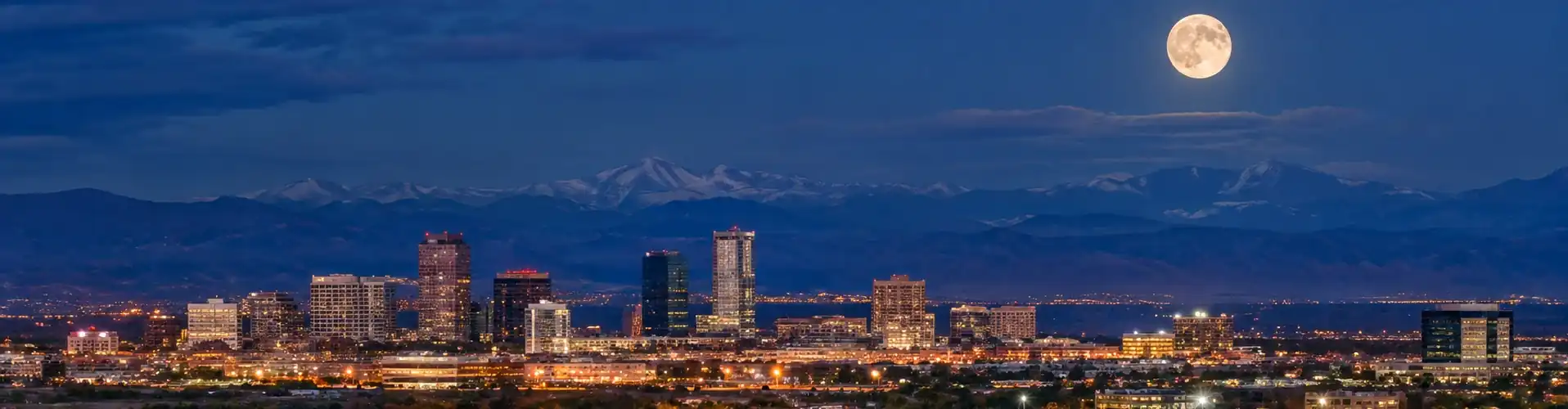
☽ Best Places to View the Moon in Aurora, CO
Aurora sits on Colorado's High Plains at roughly a mile above sea level, with the Rocky Mountains visible along the western horizon from several of its open spaces — a striking backdrop even though the moon itself will be rising from the opposite, eastern side of the sky. The city's reservoirs and prairie preserves give some of the most open, unobstructed horizons of any city in this series. The date and your observing location together determine the moon's rise time and direction; your viewpoint determines how much of that horizon is actually unobstructed. Several of the spots below also close before full darkness for part of the year, so they're best treated as sunset-to-early-evening moonrise locations rather than guaranteed late-night access — check each entry's current hours against your date. Here are six of the city's strongest viewpoints.
Aurora Reservoir
A roughly 1,861-acre open-space site built around a reservoir, with an 8-mile multi-use trail circling the water and Rocky Mountain views to the west. Park hours shift month to month rather than following one fixed schedule — for example, August runs 5:30 a.m.–9 p.m. and September runs 6 a.m.–8 p.m. — so check the current month's posted hours before planning an evening visit. Address: 5800 S Powhaton Rd.
Cherry Creek State Park
An 880-acre reservoir surrounded by 35 miles of trails on Aurora's western edge, popular with local astronomy groups for its relatively open sky. General park gate hours weren't confirmed on the current Colorado Parks and Wildlife page — the 6 a.m.–10 p.m. figure listed there is specifically for the on-site EV charging stations, not park access — so check CPW's current hours before planning a late visit. A vehicle day-pass runs $10–15; the visitor center itself keeps separate, shorter seasonal hours. Address: 4201 S Parker Rd.
Star K Ranch / Morrison Nature Center
A 240-acre open space of prairie, cottonwood forest, and wetlands, with dog-friendly trails (except the wetland loop) connecting to both the Sand Creek Greenway and the High Line Canal Trail. The trail system is open dawn to dusk, seven days a week, free of charge; the Morrison Nature Center building itself keeps separate hours (closed Monday–Tuesday, noon–4:30 p.m. Wednesday–Friday, 9 a.m.–4:30 p.m. weekends). Address: 16002 E Smith Rd.
Plains Conservation Center
A 1,100-acre shortgrass prairie preserve with rolling trails, a reconstructed 1800s homestead and tipi camp, and reported Rocky Mountain views on clear days. Free to enter and hike. Gate hours run on a seasonal schedule (during daylight saving time, roughly 6:30 a.m.–4:30 p.m. Monday–Thursday, 6:30 a.m.–6 p.m. Friday, and 8 a.m.–6 p.m. weekends) — this one closes well before dark for much of the year, so check the current schedule and the moon's rise time for your date. Address: 21901 E Hampden Ave.
Sand Creek Regional Greenway
A nearly 13-mile public trail and natural area connecting Aurora, Denver, and Commerce City, with a mix of paved and soft-surface/gravel trail in the Aurora section, including a stretch through Star K Ranch. It is open sunrise to sunset daily.
Jewell Wetland
A 46-acre city open-space parcel with a butterfly garden and a boardwalk through wetland habitat, offering birding and turtle-watching — a smaller, quieter option than the reservoirs. Specific hours weren't confirmed for this listing; treat it as a daytime or early-evening destination and check posted signage before a late visit. Address: 13005 E Jewell Ave.
◉ Best Times for Moon Photography
📷 Quick Photography Tips
Aurora runs on Mountain Time — MST (UTC−7) in winter and MDT (UTC−6) in summer, since Colorado observes daylight saving time. PhotoPills or Stellarium will handle the moon's exact rise azimuth for any of these spots automatically.
The moon phase today in Aurora is shown in detail above — complete with exact illumination percentage, moonrise/set times, and the best local spots to see it. For the moon phase today in any other city worldwide, visit our Dynamic Moon Phase Calculator on the home page.
◐ What the Experience Actually Feels Like
At Aurora Reservoir, the trail sees a mix of cyclists, anglers, and dog walkers through the evening hours, with the water sometimes calm enough to hold a reflection of whatever the sky is doing. The Rockies to the west can catch the day's last color while the moon comes up from the opposite direction entirely.
Out at Plains Conservation Center, if you can time it before the gates close, the setting is open shortgrass prairie in every direction, with a reconstructed homestead and tipi camp adding scale, and pronghorn or coyotes sometimes visible in the distance — a landscape the City itself describes as home to bald eagles, prairie dogs, and coyotes.
At Star K Ranch, the cottonwood-shaded trails feel more enclosed than the open reservoirs, with the wetland loop a good spot for birding earlier in the day. Since the trail system is only open dawn to dusk, this one works best for a moonrise that happens to fall before the light fades rather than an after-dark visit.
"Out at Plains Conservation Center, the setting is open shortgrass prairie in every direction, with a reconstructed homestead and tipi camp adding scale — a landscape the City itself describes as home to bald eagles, prairie dogs, and coyotes."
✓ Your Aurora Moon Chase Checklist
Before You Go
- Check the moonrise time and rise azimuth for your date — the date and your observing location together determine the moon's rise time and direction, while your viewpoint determines how much of that horizon is actually unobstructed
- Check both the moon's rise time and the venue's hours — Aurora Reservoir's hours change monthly, and Plains Conservation Center closes well before dark most of the year
- Verify Site Access: Cherry Creek State Park charges a daily vehicle fee ($10–15); general gate hours weren't confirmed on the current CPW page, so check current park hours directly before planning an evening visit
- Use PhotoPills or Stellarium to check whether the moon will align with a specific landmark on your date
- Check the radar for fast-building Front Range thunderstorms, especially in summer afternoons and evenings
- Confirm current rules on tripods and photography at your chosen park, especially for anything beyond personal use
What to Bring
- A telephoto lens, often 200mm or longer, can help compress the moon behind a distant tree line or reservoir dam
- Water and sun protection — Aurora's elevation of roughly 5,400 feet means stronger UV exposure and potentially faster dehydration than at lower elevations
- A remote shutter release or a 2-second timer to avoid shake on tripod shots
- A warm layer — Front Range evenings cool off quickly once the sun is down, even after a hot day
- Cash or a card for Cherry Creek's vehicle entrance fee and Plains Conservation Center's optional program fees, since most other spots on this list are free
On the Night
- Arrive at your viewpoint at least 30–45 minutes early, especially at Cherry Creek State Park and Aurora Reservoir on clear weekend evenings
- Focus manually on the moon's edge — trailhead lighting and reservoir-area lighting can confuse autofocus at dusk
- Bracket your exposures — one for the bright lunar disc, one for the darker prairie, water, or mountain silhouette below
- If the moon looks soft or hazy right at moonrise, consider waiting until it climbs higher above the horizon, when atmospheric effects are often less pronounced
- At Plains Conservation Center, plan to be back at your vehicle well before the posted gate closing — don't count on staying past it
? Aurora Moon Phase — Frequently Asked Questions
Q. What is the moon phase today in Aurora?
The moon phase today in Aurora is a New Moon with 0% illumination. The next full moon is in 17 days, on Oct 25. Moonrise is at 6:08 AM and moonset at 5:58 PM.
Q. Where is the best place to view the moon in Aurora?
Aurora Reservoir is the standout spot, a roughly 1,861-acre open space with an 8-mile trail circling the water and Rocky Mountain views to the west. Cherry Creek State Park is popular with local astronomy groups for its relatively open sky, Plains Conservation Center offers a 1,100-acre shortgrass prairie with a reconstructed 1800s homestead, and Star K Ranch, the Sand Creek Regional Greenway, or Jewell Wetland add further cottonwood-and-wetland, long-trail, or quiet-boardwalk alternatives.
Q. Do these viewing spots stay open after dark?
It varies — Aurora Reservoir's hours shift month to month rather than following one fixed schedule, so checking the current month's posted hours matters here. Cherry Creek State Park's general gate hours weren't confirmed on the current state page (the 6 a.m.–10 p.m. figure listed there covers the EV charging stations, not park access), and Plains Conservation Center closes well before dark for much of the year. Star K Ranch's trails and the Sand Creek Regional Greenway are both open dawn to dusk or sunrise to sunset.
Q. Does Aurora observe daylight saving time?
Yes. Aurora runs on Mountain Time — MST (UTC−7) in winter and MDT (UTC−6) in summer, since Colorado observes daylight saving time on the standard U.S. schedule.
Q. What's the best time of year for moon photography in Aurora?
The date and your observing location together determine the moon's rise time and direction, so alignment with a specific reservoir shoreline or prairie trail depends on the exact night. It's worth remembering that the moon rises from the eastern side of the sky, opposite the Rocky Mountain backdrop to the west, so the two aren't something you'll catch in the same frame — Aurora's reservoirs and prairie preserves are valued here for their open, unobstructed horizons rather than a mountain-and-moon alignment.
Q. Does this page work for cities besides Aurora?
This page is set up specifically for Aurora, Colorado. For the moon phase in any other city or location worldwide, use the Dynamic Moon Phase Calculator on the moonphase.today home page.
✦ Explore Further
Moon Phase Today: Denver
Check tonight's moon phase in Denver, right next door.
📷Moon Photography Guide
Camera settings, lenses, and techniques for shooting sharp, well-exposed moon shots.
📐Looney 11 Exposure Calculator
Dial in the exact f-stop, ISO, and shutter speed for a full moon over the reservoir.
🌙Why Does the Moon Rise and Set?
The simple science behind why the rising time and direction shift night to night.
NASA Moon Phase & Libration Gallery
NASA's Scientific Visualization Studio's daily renders of the moon's exact phase, libration, and orientation, straight from official mission data.