
Moon Phase Today Addis Ababa
On Saturday, October 10, 2026, the moon in Addis Ababa is a New Moon with 0% illumination. Moon age: 28.9 days.
☽ Best Places to View the Moon in Addis Ababa
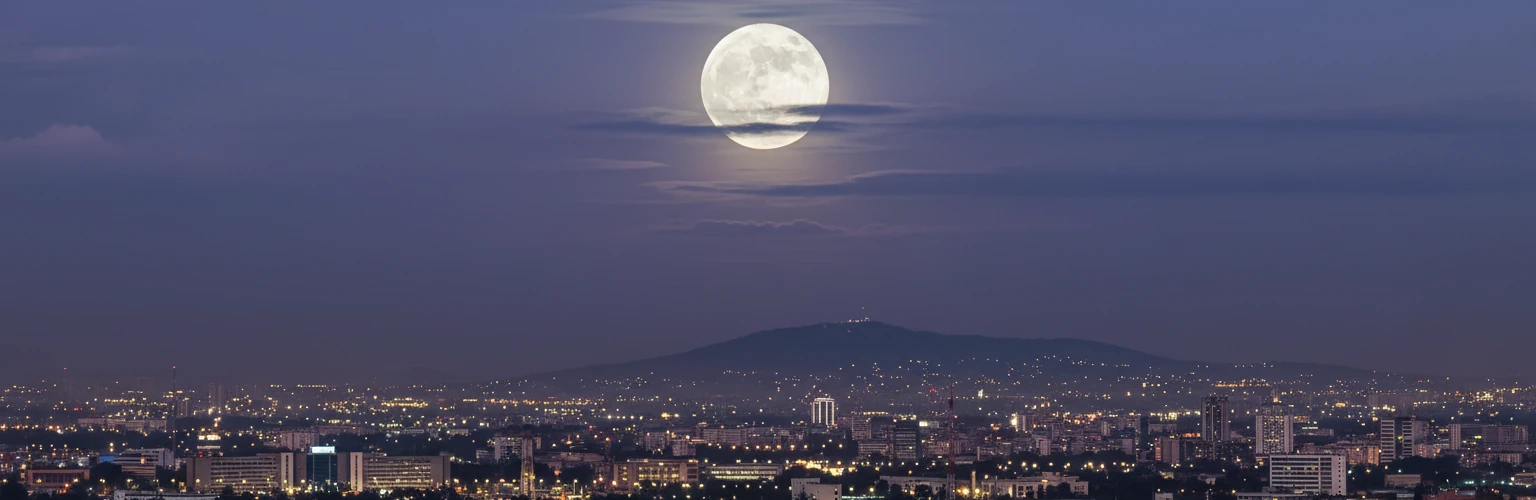
Addis Ababa’s high altitude of approximately 2,350 meters (7,700 feet) and its dramatic surrounding hills create exceptionally crisp and elevated moonrises, especially from northern viewpoints that overlook the sprawling city bowl. The city's light pollution, while present, is often offset by the clear, thin air of the Ethiopian highlands, allowing the moon to cut through with striking clarity. Addis Ababa offers unique panoramic vantage points where the moon can be framed against the city's vibrant urban landscape and the serene natural beauty of the eucalyptus forests. From the majestic heights of Entoto Hill to the more intimate settings of botanical gardens and market areas, photographers and casual observers alike will find diverse backdrops for lunar observation. The elevation here means moonrise is often a grand spectacle, with the moon appearing to ascend directly over the bustling capital, creating a memorable interplay between nature and urban life.
Entoto Hill / Entoto Natural Park
The undisputed #1 Addis Ababa moonrise viewpoint. At approximately 3,000 meters, the panoramic terraces offer breathtaking views over the entire city skyline and valley. The moon rises dramatically over the city, often dead-center on many dates, creating a stunning scene with eucalyptus forests and historic churches (like Entoto Maryam) in the foreground. This location provides both vast open views and interesting natural and architectural elements for composition. Accessible by drive or hike; an entry fee of approximately ETB 1,000 applies for foreigners.
Mount Entoto Observatory Area
Part of the larger Entoto Park, this area offers noticeably darker skies compared to locations closer to the city center. The moon rises over the distant city lights, making it ideal for wide-angle shots that capture the urban glow beneath the lunar spectacle. The observatory features telescopes primarily for viewing the city lights and distant landmarks, offering a unique perspective of Addis Ababa by night. This spot balances city views with a clearer, less light-polluted sky, perfect for clearer lunar details.
Yeka Hills / British Embassy Area Viewpoints
Situated in the northern residential hills, these viewpoints offer open eastern views towards the city. The moon rises over the vast city bowl, providing compositions with a greener, more natural foreground in contrast to the urban sprawl. The area features accessible trails, allowing for varied positioning and framing opportunities. It's a quieter, more relaxed spot compared to the bustling Entoto peak, offering a serene environment for moon photography with the city as a distant, sparkling backdrop.
Shiro Meda Market Area / High Points
Located on the northern slopes of the city, the Shiro Meda market area offers a vibrant cultural foreground for moonrise photography. The moon ascends over traditional textiles, bustling market activity, and the ambient city glow. During evening markets, the interplay of local life with the rising moon can create incredibly unique and authentic compositions that blend natural beauty with Ethiopian culture. This spot provides a less conventional but highly rewarding photographic experience.
Gullele Botanical Garden – Upper Terraces
This hilltop botanical garden provides panoramic city views from its upper terraces. The moon rises majestically over the Addis Ababa skyline, framed by lush plants and carefully designed pathways. While the garden offers a serene setting, visitors should note that facilities are still under development, providing a more natural and less overtly curated experience. An entry fee applies, and visitors should check the garden's evening hours for optimal moonrise viewing, especially during special events.
Entoto Park Viewpoints (e.g., near restaurants or zipline)
Within the modern facilities of Entoto Park, several viewpoints near popular amenities like restaurants or the zipline offer excellent opportunities to witness the moon rising over Addis Ababa. These spots are particularly family-friendly, providing well-lit areas and additional activities that can enhance the viewing experience. The modern infrastructure here allows for comfortable and accessible moon observation, combining the natural grandeur of the highlands with convenient amenities.
◉ Best Times for Moon Photography
📷 Quick Photography Tips
Addis Ababa operates on EAT (East Africa Time, UTC+3) year-round with no daylight saving time. Ethiopia does not observe DST, so moonrise and moonset times are consistent and predictable throughout the year. Apps like PhotoPills, The Photographer's Ephemeris, or Stellarium set to Addis Ababa apply the correct offset automatically and can be trusted for precise moonrise calculations any time of year.
The moon phase today in Addis Ababa, Ethiopia is shown in detail above — complete with exact illumination percentage, moonrise/set times, and the best local spots to see it.
◐ What the Experience Actually Feels Like
There's a unique crispness to the air in Addis Ababa, especially on the high hills overlooking the city, that amplifies the moon's presence in a way that low-altitude cities rarely can. You ascend Entoto Hill, leaving the bustling city behind, and as the sun dips below the western horizon, a profound transformation occurs. The city, spread out below like a vast, glittering carpet, begins to twinkle, and then, from the eastern edge of the sprawling valley, the moon begins its majestic ascent. It's not a soft, hazy glow but often a strikingly defined orb, its features clear even to the naked eye, a testament to the thin, clean air of the Ethiopian highlands.
Standing at nearly 3,000 meters on Entoto, the scale of the landscape is overwhelming. Eucalyptus forests whisper in the wind, and ancient churches cling to the slopes. The moon, often appearing larger than life against the darkening sky, seems to hang directly over the heart of Addis Ababa. This is a scene where the wild beauty of nature—the rugged hills and the vast sky—meets the dynamic energy of a vibrant African capital. The contrast is profound: the silent, ancient moon against the modern, breathing city, all bathed in a light that feels both ethereal and intensely real.
What truly distinguishes moon gazing in Addis Ababa is the elevated perspective. You’re not merely looking up at the moon; you’re looking *down* at a city, with the moon rising *above* it all. From the upper terraces of the Gullele Botanical Garden, for instance, you can frame the moon through exotic foliage, adding a layer of intricate beauty to the raw power of the lunar landscape. Even in the more bustling areas like Shiro Meda, the moon can suddenly appear, a brilliant spotlight illuminating the vibrant evening markets, making the familiar feel extraordinary. The experience is less about finding solitude and more about witnessing a grand, high-altitude spectacle where the cosmos and culture intertwine.
"The moon begins its majestic ascent from the eastern edge of the sprawling valley, a strikingly defined orb in the thin, clean air of the Ethiopian highlands, hanging directly over the heart of Addis Ababa."
✓ Your Addis Ababa Moon Chase Checklist
Before You Go
- Check the moonrise and moonset times on this page — moonrise over the city to the east is the signature Addis Ababa shot; moonset will be less dramatic over the western hills
- Target October through March for the clearest, sharpest moonrises — humidity drops noticeably and the high-altitude haze is at its minimum during these months
- Use PhotoPills or Stellarium set to Addis Ababa (UTC+3, no DST) to identify ideal dates and angles for framing the moon with city landmarks or natural features
- If heading to Entoto Natural Park or Gullele Botanical Garden, confirm evening opening hours and any entry fees in advance to avoid disappointment
- Consider the moon's position relative to the city bowl — northern viewpoints (Entoto, Yeka Hills) generally offer the best sweeping views for moonrise compositions
What to Bring
- Sturdy tripod — the persistent winds on the high hills of Entoto and Yeka can make long exposures challenging without solid support
- A lens between 70–200mm for compressing the distant city and moon, making the moon appear larger relative to the urban landscape
- Warm layers of clothing — despite the tropical latitude, nights at Addis Ababa's altitude can be surprisingly cool, especially on exposed hilltops
- A wide-angle lens for panoramic city views — to capture the vastness of the city bowl with the moon as a central element
- Power bank for your phone/camera — extended shooting sessions in remote locations mean power outlets might be scarce
- Headlamp or small flashlight — for navigating trails and setting up gear in low light, especially at Entoto's less developed areas
On the Night
- Arrive at your chosen viewpoint 45–60 minutes before moonrise — this allows time to scout positions, set up your gear, and capture the pre-moonrise city glow
- At Entoto, walk to various terraces or trails to find unique foregrounds like eucalyptus trees, traditional structures, or specific city alignments
- Shoot RAW — the dynamic range between the bright moon, the dark surrounding hills, and the illuminated city requires careful post-processing for optimal results
- Embrace the high-altitude clarity — the lack of significant atmospheric distortion in Addis Ababa means sharper lunar details are possible compared to coastal cities
- Be mindful of local customs and respect privacy, especially in areas like Shiro Meda; always ask before photographing people
? Addis Ababa Moon Phase — Frequently Asked Questions
Q. What is the moon phase today in Addis Ababa?
The moon phase today in Addis Ababa is a New Moon with 0% illumination. The next full moon is in 17 days, on Oct 26. Moonrise is at 5:53 AM and moonset at 6:06 PM.
Q. Where is the best place to view the moon in Addis Ababa?
Entoto Hill and Entoto Natural Park give the city's signature moonrise, with the moon climbing over the full Addis Ababa bowl from nearly 3,000 metres up. Yeka Hills offers a quieter, greener alternative, Gullele Botanical Garden frames the skyline through foliage from its upper terraces, and Shiro Meda's market area gives a distinctive, culturally rich foreground for a very different kind of shot.
Q. Why does moon visibility change so much in Addis Ababa through the year?
Addis Ababa sits at roughly 9° N, close enough to the equator that the moon's rise and set times stay fairly consistent all year. What changes visibility most here is a mix of humidity and haze: October through March brings the lowest humidity and the clearest, sharpest skies, helped along by the thin, clean air at the city's roughly 2,350-metre altitude.
Q. Does Addis Ababa observe daylight saving time?
No. Ethiopia does not observe daylight saving time, so Addis Ababa stays on East Africa Time (EAT, UTC+3) year-round. The times shown on this page never need a seasonal adjustment.
Q. What's the best time of year for moon photography in Addis Ababa?
October through March offers the lowest humidity and the clearest skies, and the thin highland air at this altitude tends to keep moon detail sharp even outside that window. September and April add comfortable temperatures for longer sessions on the exposed hilltop viewpoints.
Q. Does this page work for cities besides Addis Ababa?
This page is set up specifically for Addis Ababa, Ethiopia. For the moon phase in any other city or location worldwide, use the Dynamic Moon Phase Calculator on the moonphase.today home page.
✦ Explore Further
Moon Photography Guide
Camera settings, lenses, and techniques for shooting sharp, well-exposed moon shots.
📐Looney 11 Exposure Calculator
Dial in the exact f-stop, ISO, and shutter speed for a full moon over Entoto Hill.
🌆Blue Hour Calculator
Find tonight's exact blue hour window to time your Entoto Hill moonrise shots.
🌍World Moon Phase Directory
Browse the moon phase today in hundreds of other cities and locations around the world.
NASA Moon Phase & Libration Gallery
NASA's Scientific Visualization Studio's daily renders of the moon's exact phase, libration, and orientation, straight from official mission data.