

Wet Moon: Why the Crescent Looks Like a Bowl or Smile
Why a crescent Moon can look like a bowl or smile, what controls its orientation, and where this unusual lunar appearance can be seen.
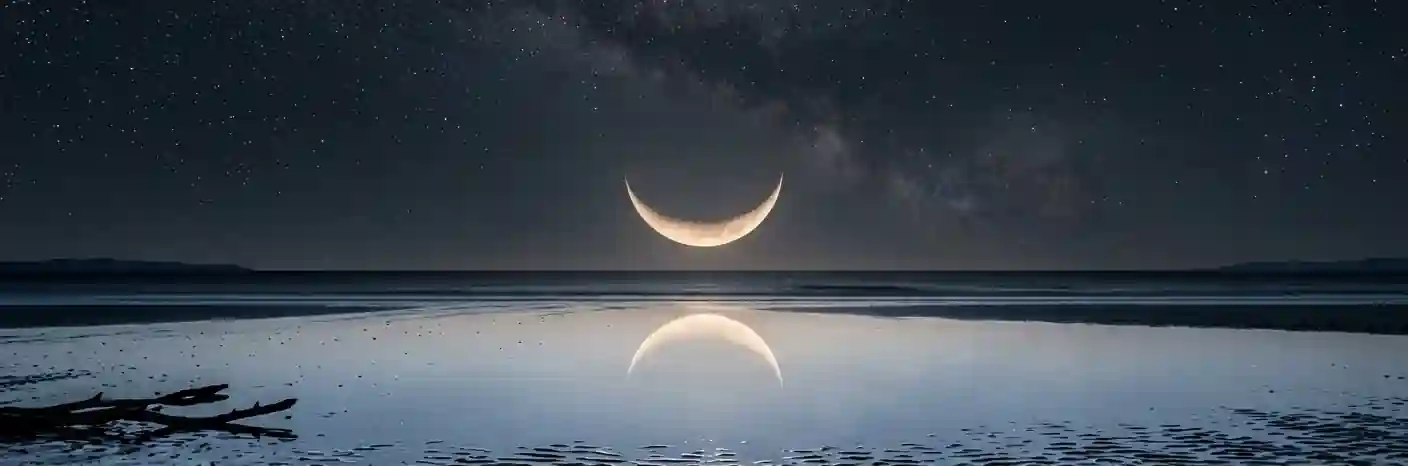
What Is a Wet Moon?
A wet Moon is a visual appearance of a crescent Moon in which the illuminated crescent looks like a bowl, cup, or smile, with its horns pointing upward from the horizon.
It is also called a Cheshire Moon. There is nothing unusual happening to the Moon itself — a wet Moon is not a separate lunar phase. It is the result of how the crescent Moon is oriented relative to your local horizon.
The effect is easiest to understand when you stop thinking of the crescent as having a fixed “up” direction. The Moon is a three-dimensional object in space, and the direction that appears to be “up” in the sky depends on the relationship between the Moon, the Sun, Earth, and the observer. That is why the same crescent Moon can look tilted in one place and almost like a smile in another.
Why Does the Moon Look Like a Bowl or Smile?
The bright part of the crescent is always the portion of the Moon illuminated by sunlight. The Sun does not suddenly illuminate the Moon differently when a wet Moon appears — instead, we are viewing that illuminated portion from a different geometric angle.
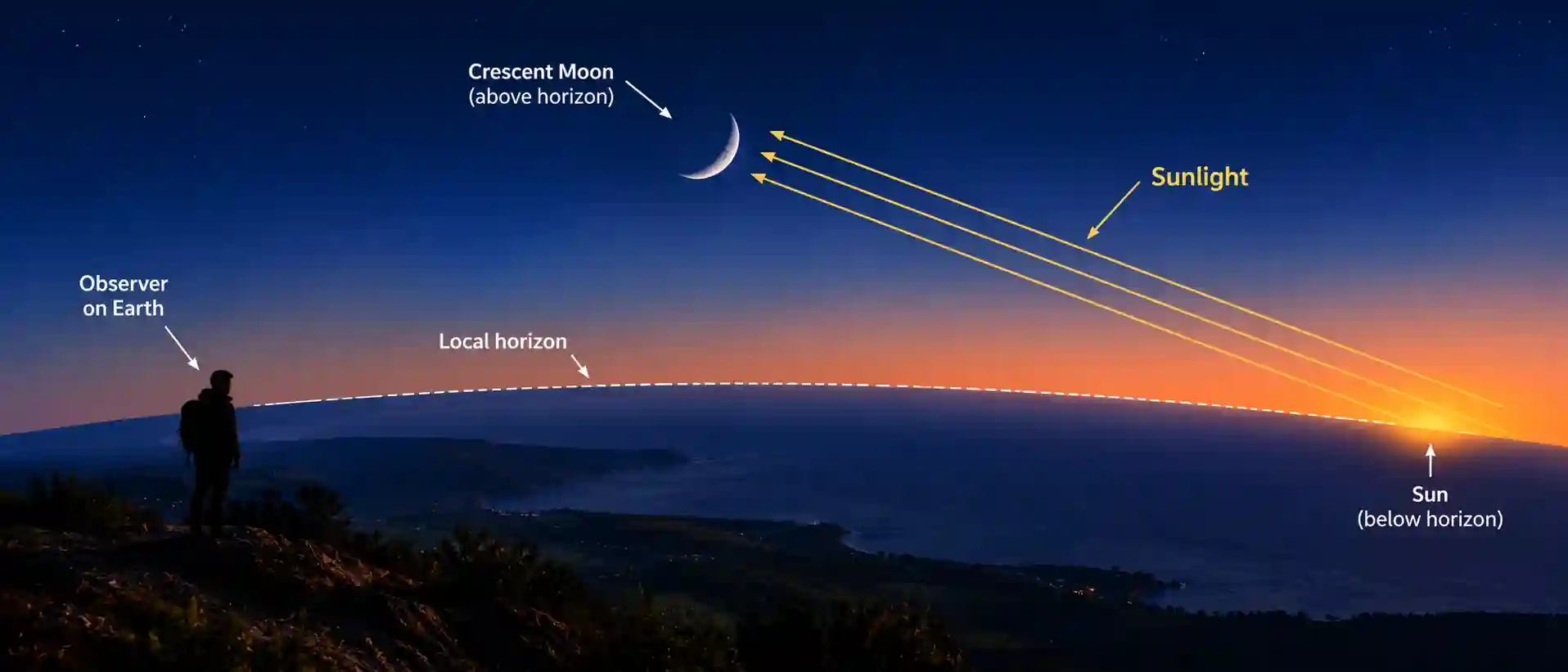
That simple relationship explains much of what looks strange about a wet Moon.
What Causes the Wet Moon?
Several pieces of celestial geometry work together to create the appearance.
1. The Moon Must Be Near the Sun in the Sky
A crescent Moon occurs relatively close to the Sun in the sky because the Moon is between its new-Moon and first-quarter positions, or between its last-quarter and new-Moon positions. This means a crescent is normally seen relatively close to sunrise or sunset.
2. The Ecliptic Has to Meet the Horizon at a Suitable Angle
The ecliptic is the apparent path of the Sun across the sky over the course of a year. The Moon travels close to this path because its orbit is inclined only about 5.1 degrees to the ecliptic.
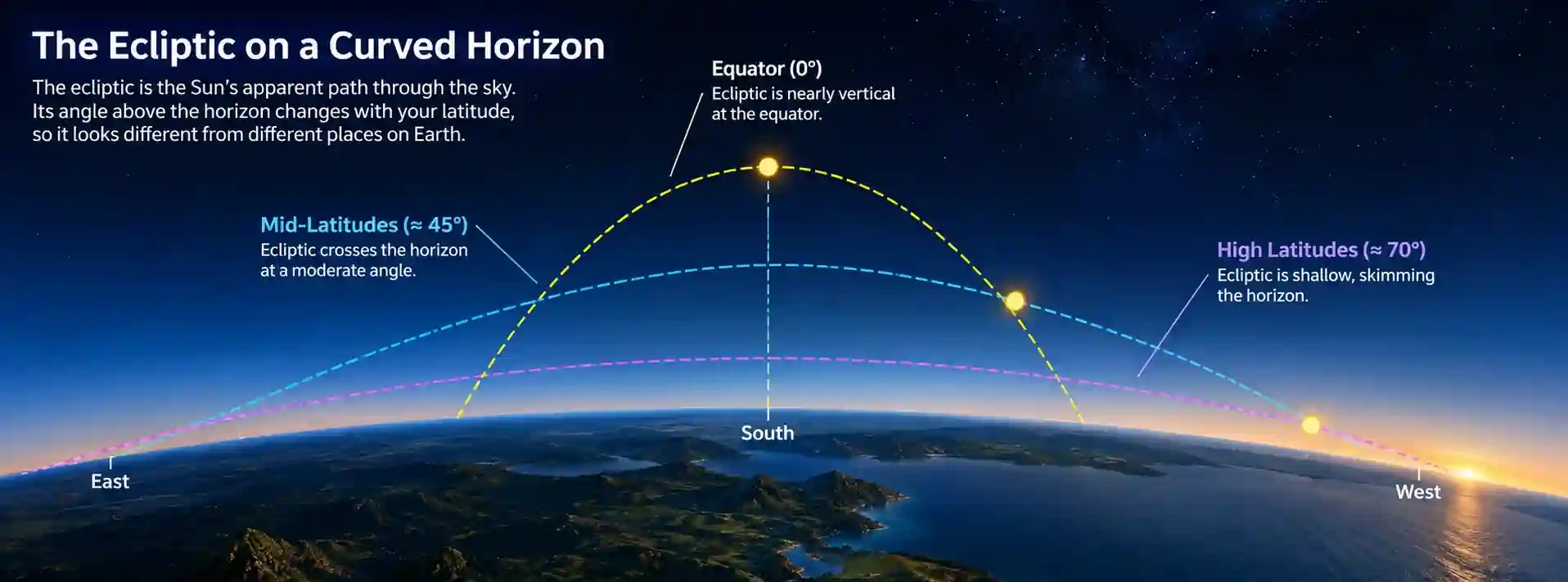
But the ecliptic does not intersect the horizon at the same angle everywhere or at every time of year — and that is extremely important to the appearance of the crescent.
3. Your Latitude Matters
The observer’s latitude changes the angle at which celestial objects appear to rise and set. Near the tropics, the Sun and Moon can rise and set at relatively steep angles, which makes bowl-shaped crescents possible more routinely. At higher latitudes, the paths can meet the horizon at shallower angles, making the classic wet-Moon appearance less common.
Why Does the Crescent Change Its Orientation?
Many people first learn the Moon as something that looks roughly like a familiar tilted crescent. But the Moon does not actually have a permanent “top” and “bottom” as seen from Earth — the orientation we see changes because our local sky is different.
Imagine holding a crescent-shaped object in front of you while turning around. The object has not changed, but its orientation relative to your surroundings has. The same principle applies to the Moon. The geometry becomes especially noticeable because the crescent is close to the horizon — at that point, the relationship between the Moon’s position and your local horizon becomes visually obvious.
Latitude Makes a Big Difference
A person near the equator can see a very different orientation from someone observing the same general lunar phase from Canada, northern Europe, or Alaska.
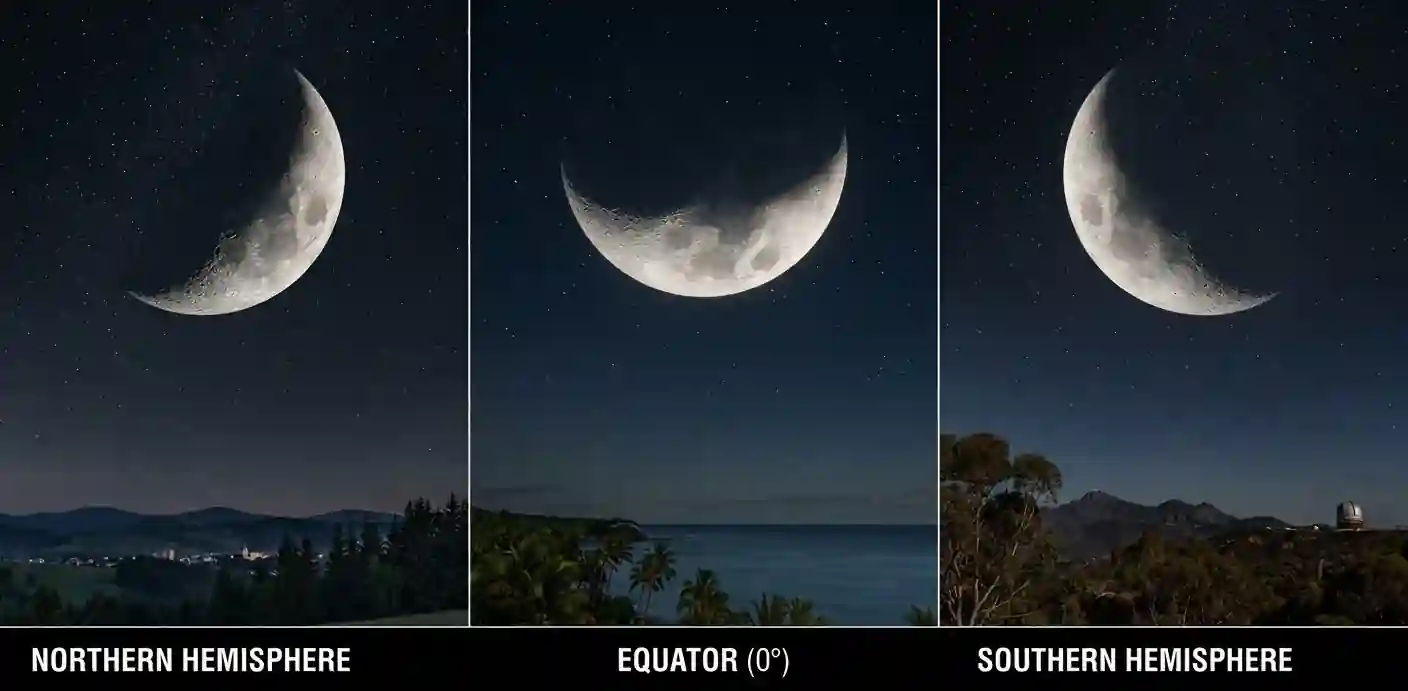
This is one reason photographs of unusual crescent Moons from different parts of the world can look surprisingly different. The Moon has not changed its phase to suit the observer — the observer’s viewing geometry has changed.
Where Can You See a Wet Moon?
Wet Moons are most routinely associated with low latitudes, particularly tropical regions, though they can also occur outside the tropics when the geometry is favorable. There isn’t a simple boundary where wet Moons suddenly stop occurring — instead, the likelihood and appearance depend on:
- Observer latitude
- Season
- The Moon’s position along its orbit
- The Moon’s position relative to the ecliptic
- Local horizon
- Time of observation
The Moon’s orbit is inclined about 5.14 degrees to the ecliptic, so the Moon can appear somewhat north or south of the Sun’s apparent path.
When Is a Wet Moon Most Likely to Appear?
There is no single worldwide date when the Moon becomes a wet Moon. The appearance is a geometric effect, so the circumstances change with location and date. The seasonal relationship is important because the ecliptic’s angle relative to the horizon changes throughout the year.
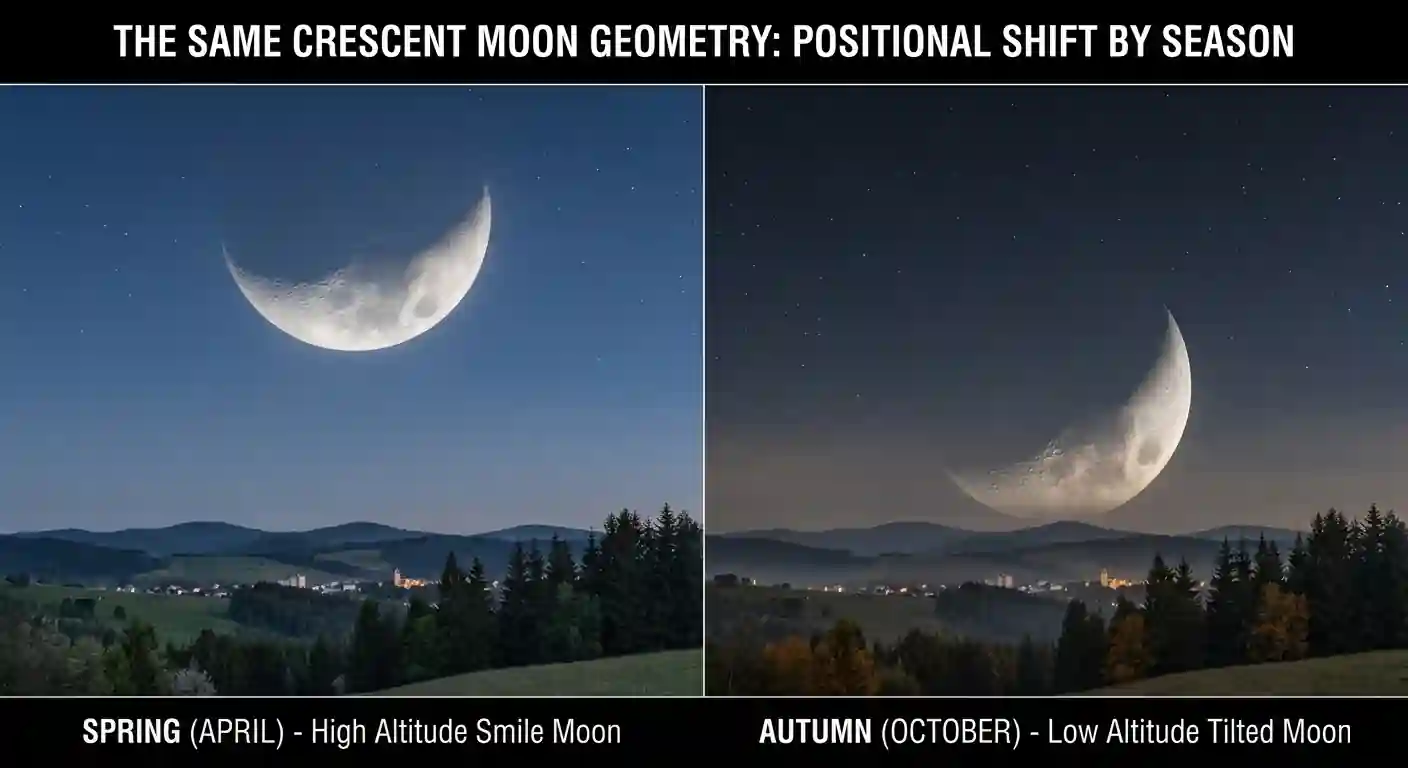
Around the equinoxes, the ecliptic can meet the horizon at a relatively steep angle in suitable locations, which can make the crescent appear more like a bowl when it is low in the sky.
Wet Moon vs. Dry Moon
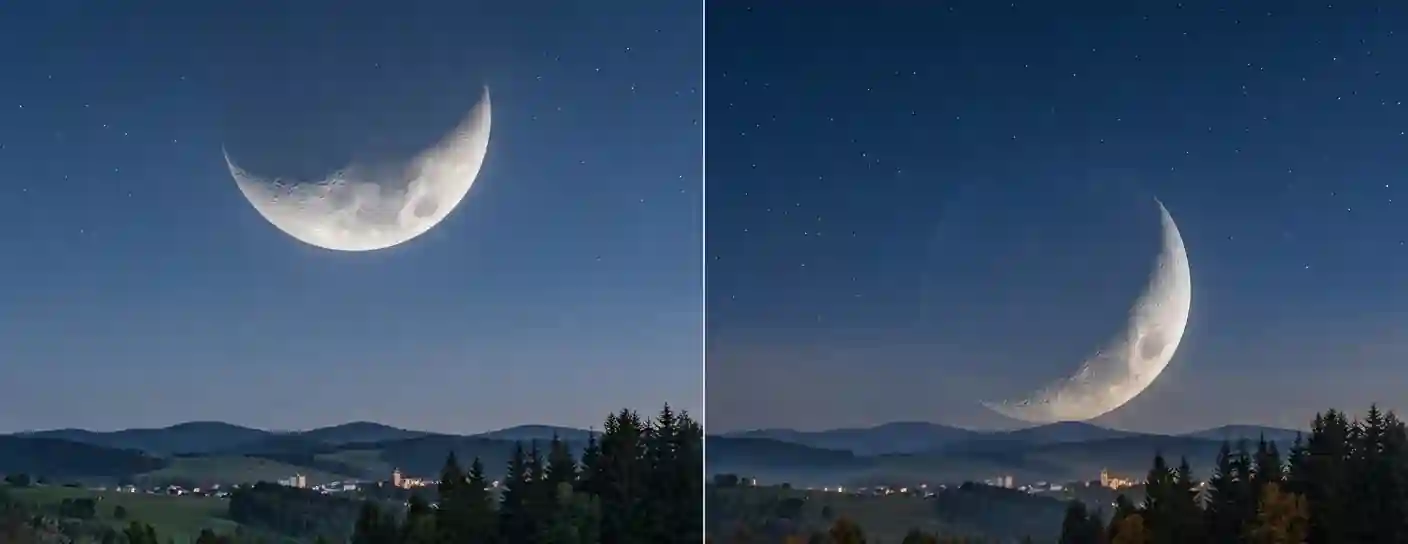
The terms wet Moon and dry Moon describe the apparent orientation of a crescent — not separate lunar phases.
Wet Moon
The crescent’s horns point upward, giving it a bowl, cup, or smile-like appearance.
Dry Moon
A crescent at another orientation that does not have the characteristic bowl-like appearance.
Is a Wet Moon a Different Moon Phase?
No. A wet Moon is not an additional phase of the Moon. The recognized lunar phases include:
- New Moon
- Waxing Crescent
- First Quarter
- Waxing Gibbous
- Full Moon
- Waning Gibbous
- Last Quarter
- Waning Crescent
A wet Moon is an unusual orientation of a crescent Moon, so the crescent can be either waxing or waning. This distinction matters because “wet” describes how the crescent looks, while “waxing” or “waning” describes where the Moon is in its lunar cycle.
Does a Wet Moon Have Anything to Do With Rain?
The name has a connection to traditional lunar folklore, but a wet Moon is not a scientific indicator of rain. The term is associated with Hawaiian mythology in historical descriptions of the phenomenon — the crescent was traditionally imagined as a bowl that could hold water, with seasonal interpretations attached to its changing orientation.
That cultural explanation is interesting, but it should be kept separate from the astronomy. A wet Moon occurs because of celestial geometry. It does not cause rain, predict rain, or indicate that rain is about to occur. Modern weather forecasting is based on atmospheric observations and physical processes rather than the apparent orientation of a lunar crescent.
Why Is It Also Called a Cheshire Moon?
Another name for a wet Moon is Cheshire Moon. The name refers to the crescent’s resemblance to a smiling Cheshire Cat associated with Lewis Carroll’s Alice’s Adventures in Wonderland.
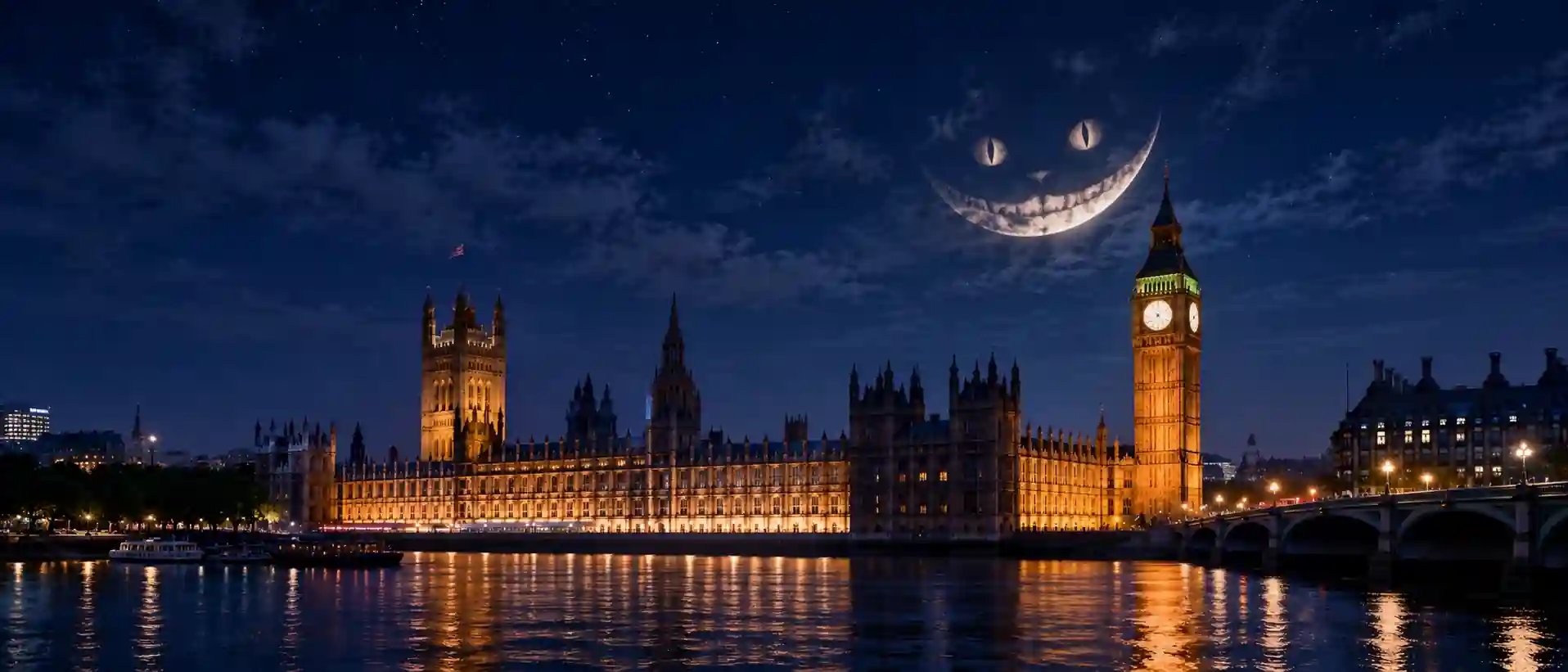
The “Cheshire” part is descriptive rather than astronomical. The scientific explanation remains the same: the crescent is being viewed at a particular orientation relative to the observer’s horizon.
How to Recognize a Wet Moon
The next time you are outside around twilight, look for a thin crescent Moon close to the horizon and ask three questions:
Is the Moon a crescent? If it’s more than a crescent, the classic wet-Moon appearance won’t apply.
Is the crescent close to the horizon? The effect is particularly associated with a low crescent.
Are the horns pointing upward? If the crescent resembles a bowl or smile, you may be looking at a wet Moon.
The Science in One Picture
The entire phenomenon can be reduced to one basic piece of celestial geometry: sunlight illuminates the Moon, while the observer sees that illuminated surface from a particular position on Earth.