
August 2026 Moon Phases
Last Quarter falls on August 6, New Moon on August 12, First Quarter on August 20, and Full Moon on August 28. This month also brings a total solar eclipse and the Perseid meteor shower peak on the New Moon, plus a deep partial lunar eclipse alongside the Sturgeon Moon. Click a moon below for details and events near the phase.


August 2026 is one of the busiest months of the year for skywatchers. A total solar eclipse falls on the New Moon, the Perseid meteor shower peaks that same night under dark, moonless skies, and the month closes with the Sturgeon Moon riding alongside a deep partial lunar eclipse. Here’s what’s happening and when.
| Event | Date | Peak time (ET) | Who sees it |
|---|---|---|---|
| Total solar eclipse | Aug 12 | ~1:46 PM EDT | Totality: Greenland, Iceland, Spain. Partial: Alaska, eastern Canada, parts of New England |
| Perseid meteor shower peak | Aug 12–13 (overnight) | After midnight, before dawn | Northern Hemisphere |
| Sturgeon Moon (Full Moon) | Aug 28 | 12:20 AM EDT | Worldwide, night side of Earth |
| Partial lunar eclipse | Aug 27–28 (overnight) | ~12:12 AM EDT | Americas (best view), Europe, Africa |
A total solar eclipse on the New Moon
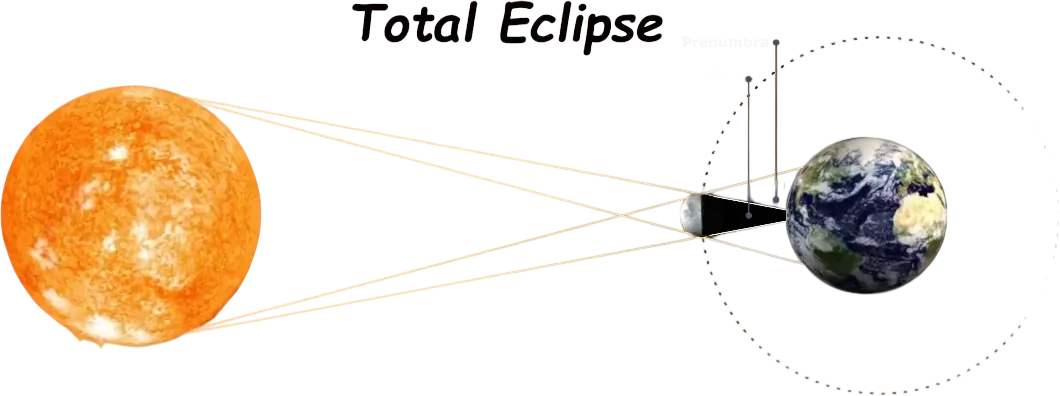
On August 12, the New Moon lines up precisely between Earth and the Sun, producing this year’s total solar eclipse. The path of totality is narrow and remote: it crosses the Arctic near the North Pole, sweeps down through Greenland, and reaches Iceland, where the total phase lasts a little over two minutes. It continues on to northern Spain, where totality happens close to sunset, before ending over the Balearic Islands. It’s the first total solar eclipse visible from mainland Europe since 1999.
North America won’t see totality this time, but a partial eclipse reaches the continent’s northern edge. Alaska gets the best view in the U.S. — around 28% of the Sun covered, seen as a sunrise eclipse — while eastern Canada sees closer to half the Sun covered in the afternoon, and a smaller partial eclipse is visible across parts of New England and the northeastern U.S. Eclipse glasses are required any time part of the Sun is still visible; there is no point in this eclipse, for U.S. viewers, when it’s safe to look without them.
The Perseids peak the same night
The Perseid meteor shower is active from mid-July through late August, but it peaks overnight on August 12–13, producing up to 100 meteors an hour under a clear, dark sky. This year that peak falls on the New Moon, so there’s no moonlight competing with the meteors — one of the better viewing years for the Perseids in some time. For the timing of other showers throughout the year, see our meteor shower calendar.
A few things make the difference between a good night and a frustrating one. Get away from city lights if you can; even suburban light pollution cuts the visible count sharply. Give your eyes 20 to 30 minutes to adjust to the dark, and skip the phone screen once you’re out there. You don’t need a telescope or binoculars — meteors move too fast to track through either, and wide, unaided eyes catch more of the sky. The shower’s radiant sits in the constellation Perseus, but you’ll actually see more, longer meteor trails by looking somewhat away from the radiant rather than straight at it. Rates build through the night and are best in the hours before dawn.
The Full Moon on August 28 is the Sturgeon Moon
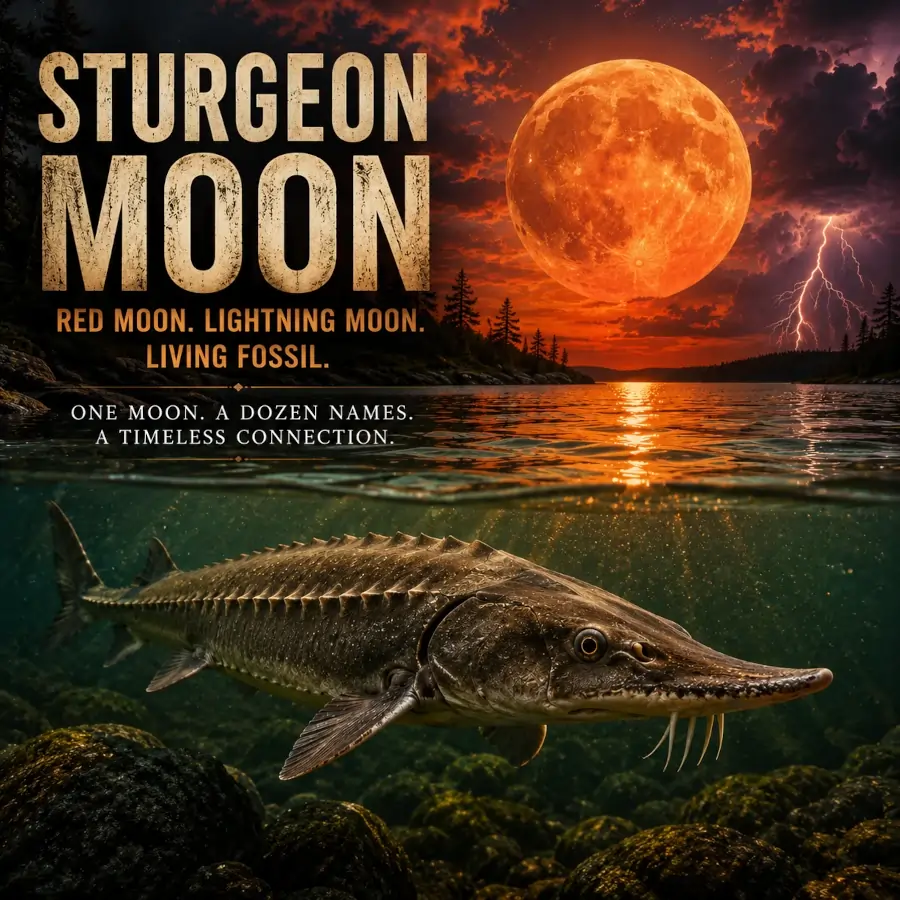
August’s Full Moon is widely known as the Sturgeon Moon. The name comes from Algonquin-speaking tribes across what’s now the northern and eastern United States and Canada, who found sturgeon — a large fish native to the Great Lakes and Lake Champlain — easiest to catch in large numbers around this time of year. Like most traditional Full Moon names, it wasn’t really naming the Moon so much as naming the month through the lens of what was happening on the ground: a fishing season, a harvest, a change in weather.
The Sturgeon Moon isn’t the only name attached to August’s Full Moon. Some regional and tribal traditions called it the Green Corn Moon or Grain Moon, tied to the crops coming in around the same time, and a few called it the Red Moon, for the way it can appear low and reddened through late-summer atmospheric haze near the horizon. For the fuller history and a look at how these names vary across different traditions, see our Sturgeon Moon guide.
A partial lunar eclipse rides along with it
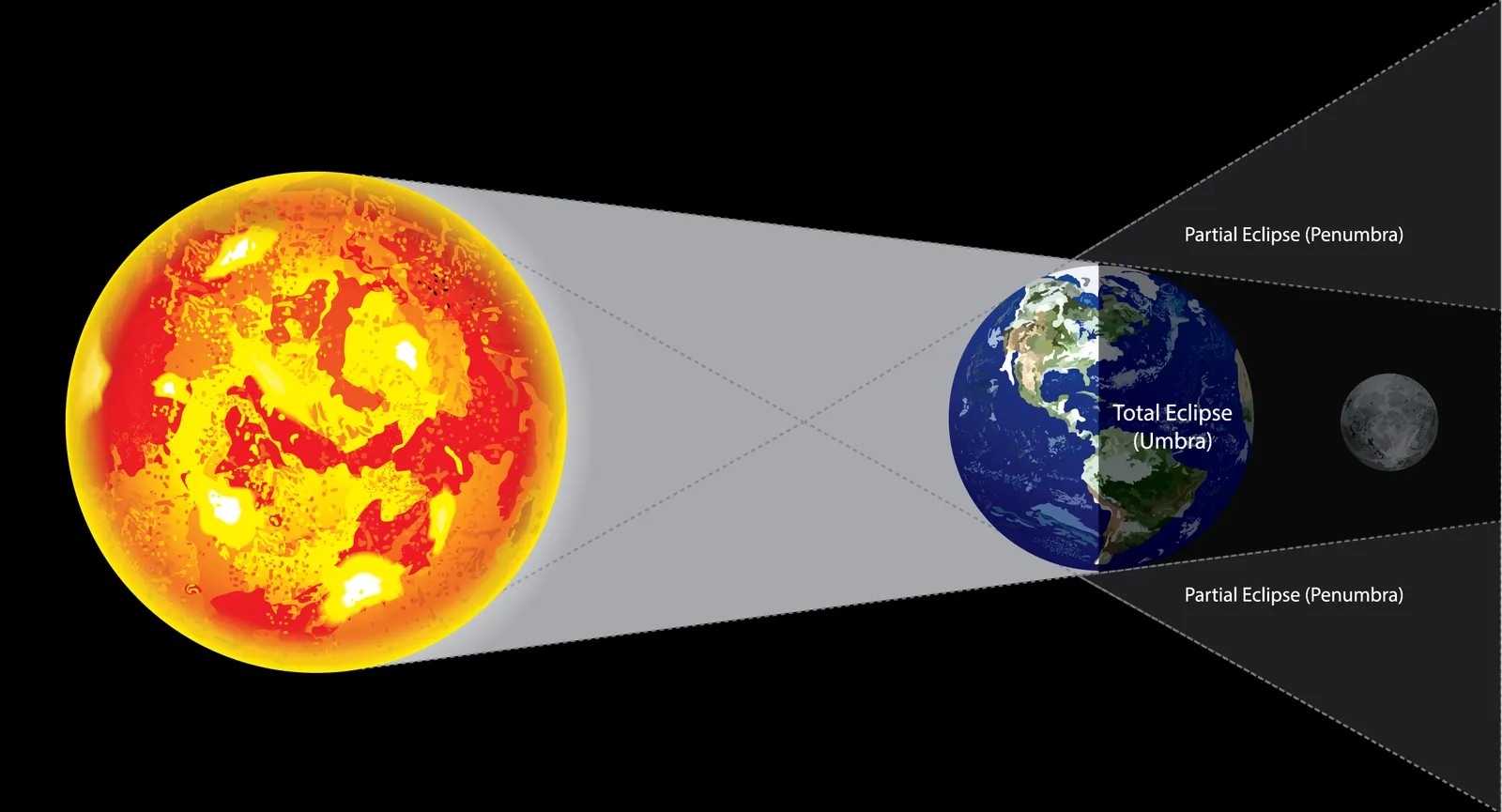
This Sturgeon Moon also carries a very deep partial lunar eclipse, overnight on August 27–28. At its peak, around 96% of the Moon’s disc passes through Earth’s dark umbral shadow — close enough to a total eclipse that the shadowed portion should take on a reddish, coppery cast, with just a thin bright sliver left uneclipsed along one edge.
Unlike the solar eclipse earlier in the month, this one favors the Americas: the entire event is visible from start to finish across most of North and South America, with peak eclipse landing around 12:12 AM EDT. Europe and Africa catch the event too, though closer to moonset, so the Moon will be lower in the sky and part of the eclipse may already be underway by the time it’s visible. No eye protection is needed to watch a lunar eclipse — it’s safe to view directly the entire time, no glasses or filters required. If you’re planning to photograph it, see our lunar eclipse photography guide.
Frequently asked questions
What are the moon phases in August 2026?
Last Quarter falls on August 6, New Moon on August 12, First Quarter on August 20, and Full Moon on August 28.
Will the August 12 total solar eclipse be visible in the United States?
Only as a partial eclipse, and only in the north. Alaska gets the best view, with roughly 28% of the Sun covered around sunrise. Parts of the northeastern U.S. and eastern Canada will see a smaller partial eclipse in the afternoon. No part of North America will see totality.
When is the best time to watch the Perseids in August 2026?
The shower peaks overnight on August 12–13, with the best rates in the hours after midnight and before dawn. Since the peak coincides with the New Moon, there’s no moonlight to interfere this year.
Why is the August full moon called the Sturgeon Moon?
The name comes from Algonquin-speaking tribes in the northern and eastern parts of what’s now the U.S. and Canada, who found sturgeon in the Great Lakes and Lake Champlain easiest to catch in large numbers around this time of year.
Will the August 28 partial lunar eclipse be visible where I live?
It favors the Americas, where the entire event is visible overnight. Europe and Africa also see it, though closer to moonset, with the Moon lower in the sky.
For daily high-resolution renderings of the Moon’s phase and orientation, see NASA’s Scientific Visualization Studio.
View NASA’s Moon Phase Gallery