

Moon Myths Debunked: Top 10 Lunar Misconceptions vs. Scientific Reality
While the Moon is Earth’s most prominent celestial neighbor, it remains the subject of significant scientific misunderstanding. From the “Dark Side” fallacy to tidal locking and lunar behavioral effects, we analyze the most common lunar myths using high-fidelity telemetry from NASA’s Lunar Reconnaissance Orbiter and established orbital mechanics.
Mission Intel Scanner
Tactical Selection Required: Choose Claim to Analyze
SELECT TARGET CLAIM FOR ANALYSIS…
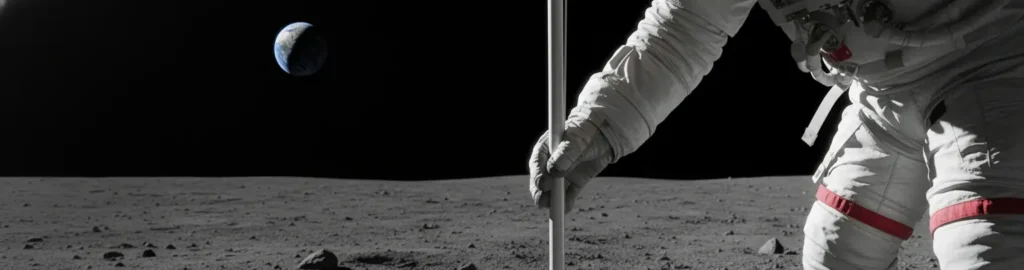
Mission: Field Verification
Proving Lunar Reality with Independent Observation
The Rotation Proof
Disprove the myth that the Moon doesn’t rotate by tracking specific geological markers over time.
- 01 Identify the Tycho Crater (the bright impact point at the bottom).
- 02 Observe Tycho once a week for 28 days using basic binoculars.
- 03 Confirm Tycho remains in position; this proves the Moon rotates once per orbit.
Daylight Intercept
The Moon is not purely nocturnal. Debunk the “Night Only” myth by timing your next observation.
- 01 Find Moonset times during a Waning Gibbous phase (post-Full Moon).
- 02 Scan the Western horizon approximately 90 minutes after sunrise.
- 03 Verify the lunar surface is clearly visible against the blue atmospheric scattering.
Horizon Illusion Hack
Prove that the “giant” Moon on the horizon is a mental trick, not a physical change in size.
- 01 Wait for a Moonrise when the Moon appears massive against the skyline.
- 02 Hold an aspirin tablet or pencil eraser at arm’s length to cover it.
- 03 Repeat when the Moon is overhead; the tablet will cover it exactly the same.
Data Integrity Briefing
The human eye is an incredible sensor but is easily fooled by psychological scale and atmospheric lensing. For absolute truth, cross-reference your observations with NASA’s Lunar Reconnaissance Orbiter (LRO) telemetry. Science relies on repeatable data, not subjective perception.
Moon Myths Debunked: Lunar FAQ
Scientific definitions and observation logistics for the modern astronomer.
What is ‘Tidal Locking’ and how does it affect our view?
Why does the Moon look orange or red when it is near the horizon?
What equipment is needed to see the Moon’s craters clearly?
Does the Moon rise at the same time every night?
Is the ‘Supermoon’ actually a scientific term?
Are we currently able to see the footprints left by Apollo astronauts?
Mission Expansion
Analyze high-fidelity lunar resources
The Lunar 100: Mapping Reality
Now that you’ve debunked the myths, explore the physical reality. A technical guide to the 100 most significant geological features on the Moon.
Moon Photography Masterclass
Prove the truth for yourself through the lens. Master the settings and logistics required to capture high-fidelity lunar landscapes.
Sky Clarity & Transparency
Mission success depends on the atmosphere. Learn how to analyze Bortle scales and seeing conditions for perfect lunar observation.