

When it comes to night hunting, choosing the right light color can make all the difference in preserving your night vision, avoiding spooking game, and enhancing overall success. Hunters often debate “red light vs green light for night hunting,” questioning which is the best light for night hunting while maintaining stealth and visibility. Understanding how different light wavelengths affect your eyes and your quarry is key — and just as moonlight influences visibility and animal behavior, tools like MoonPhase.Today can help you track ideal lunar conditions for your next hunt. This comprehensive, science-based guide dives into the biology of human and animal vision, backed by research, to help you decide between red and green lights for your next night adventure.
The Science of Human Night Vision: Rods, Cones, and Rhodopsin
To grasp why red or green light matters for night hunting, we first need to explore how human eyes adapt to darkness. Our eyes contain two main types of photoreceptors: rods and cones. Rods are responsible for scotopic vision (night vision), excelling in low-light conditions but not distinguishing colors well. Cones handle photopic vision (daytime and color vision) but require brighter light.
The key molecule here is rhodopsin, often called “visual purple,” which allows rods to detect light. When exposed to bright light, rhodopsin “bleaches” or breaks down, temporarily impairing night vision. It takes about 20-30 minutes for rhodopsin to regenerate fully in darkness.
Red light preserves night vision better because rods are relatively insensitive to long-wavelength red light (around 620-700 nm). Instead, red light primarily stimulates cones, which are less affected in low intensities. This means you can use a red light for tasks like reading maps or navigating without fully depleting rhodopsin stores. In contrast, shorter-wavelength lights like green (around 495-570 nm) or white can bleach rhodopsin more quickly, delaying your eyes’ readjustment to darkness.
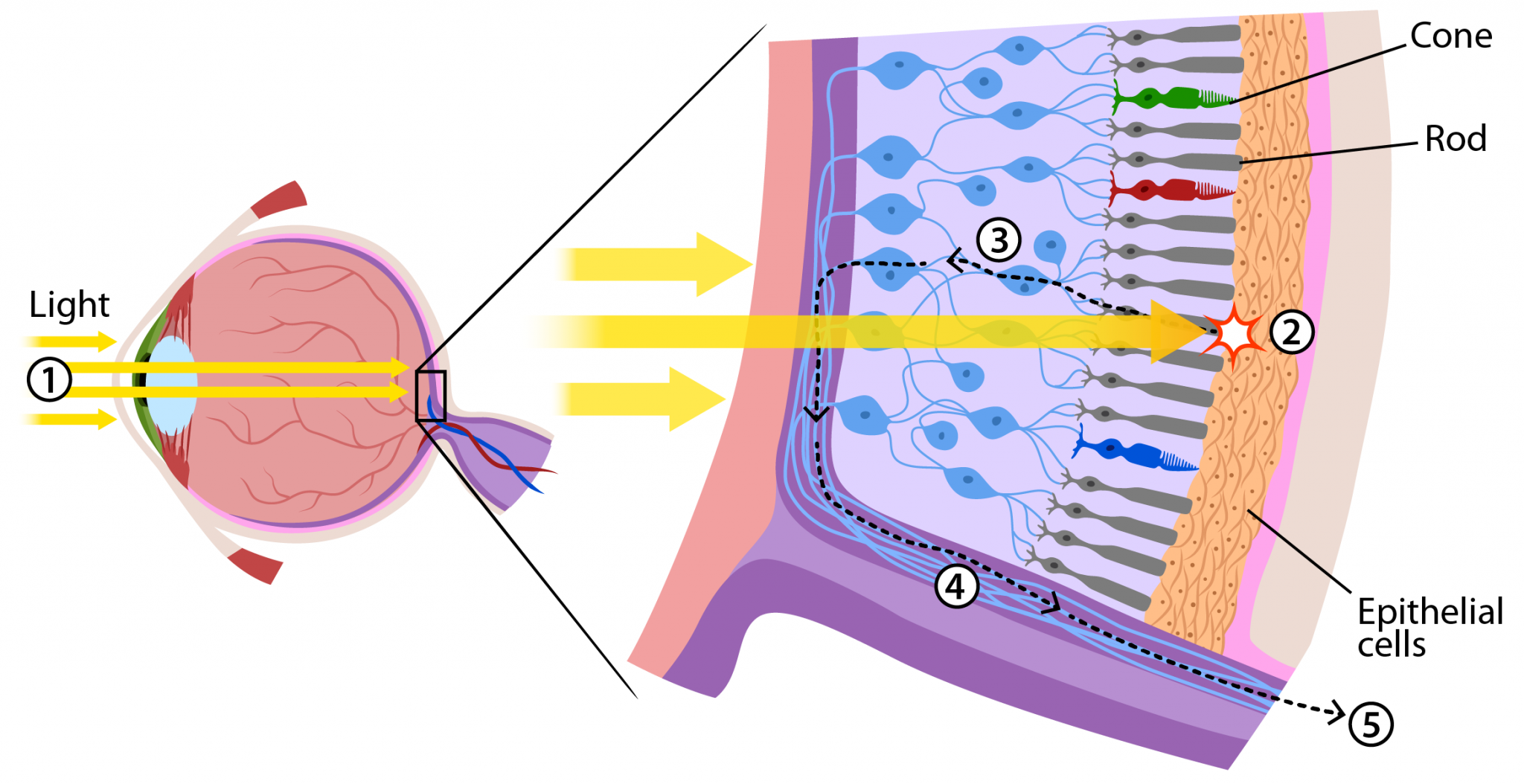
How Do We See Light? | Ask A Biologist
Scientific studies, including those from aviation and military contexts, confirm this: Red lighting in cockpits and submarines helps maintain dark adaptation. For hunters, this translates to quicker recovery after glancing at your light, giving you an edge in spotting game without fumbling in the dark.
Animal Vision: How Game Like Deer Perceive Red and Green Light
Night hunting success also hinges on not alerting your quarry. Many game animals, such as whitetail deer, have dichromatic vision, meaning they see only two primary colors: blue and green. Unlike humans, who are trichromatic with cones sensitive to red, green, and blue, deer lack red-sensitive cones. Their cones peak at around 460 nm (blue) and 535 nm (green), making them less responsive to red wavelengths.
This means deer cannot distinguish red from gray or black in low light, often perceiving it as dim or invisible. Green light, however, falls squarely in their sensitive range, potentially making it more detectable and likely to spook them. Research from the National Deer Association and wildlife biologists shows deer excel at detecting motion and ultraviolet light but struggle with red-orange hues.
For predators like coyotes, the story varies slightly. Some hunters report coyotes being less reactive to green light, but evidence suggests red is still superior for stealth as it’s harder for most mammals to detect. Overall, if your target is deer or similar ungulates, red light minimizes detection risk.

Eyes of the Forest: What Colors Can Deer See and How Is Their Vision? | Color Meanings
Deer also have a higher rod-to-cone ratio than humans, enhancing their low-light sensitivity but reducing color acuity. They can see better in twilight (crepuscular vision) and distinguish light grays/tans over dark reds/browns/greens. This underscores why using the wrong light color could give away your position.
Advantages and Disadvantages of Red Light for Night Hunting
Red light has long been a staple in night hunting gear, from headlamps to weapon-mounted lights. Here’s a breakdown:
Pros:
- Superior Night Vision Preservation: As explained, it minimally affects rhodopsin, allowing quick dark adaptation.
- Stealth Against Game: Less visible to deer and many predators, reducing spooking.
- Longer Range Perception: Some hunters note better depth perception at distance without overwhelming brightness.
- Battery Efficiency: Often requires less power for effective illumination.
Cons:
- Poorer Contrast and Detail: Red can make it harder to discern fine details or blood trails compared to green.
- Dimmer Appearance: It may feel less bright to the human eye, requiring higher intensity for the same visibility.
Red shines in scenarios like predator calling or deer stalking where stealth is paramount.
Advantages and Disadvantages of Green Light for Night Hunting
Green light has gained popularity for its brightness and utility in certain conditions.
Pros:
- Better Visibility and Contrast: Green provides sharper details, making it easier to spot game or navigate terrain.
- Effective at Lower Brightness: The human eye is most sensitive to green wavelengths, so it appears brighter without needing high power.
- Useful for Specific Tasks: Great for reading topo maps or identifying colors in mixed light.
Cons:
- Impacts Night Vision More: It bleaches rhodopsin faster, slowing dark adaptation.
- Higher Detection Risk: More visible to animals like deer, who are sensitive to green.
- Potential Eye Strain: Brighter perception can cause fatigue over long periods.
Green is ideal for hog hunting or situations where detail outweighs stealth.

Red vs Green Light: A Direct Comparison
| Aspect | Red Light | Green Light |
|---|---|---|
| Night Vision Preservation | Excellent; minimal rhodopsin impact | Fair; faster bleaching of rhodopsin |
| Animal Detection Risk | Low; invisible to many game species | Higher; visible to deer and others |
| Visibility/Contrast | Moderate; good for distance | High; better detail and brightness |
| Best For | Stealth hunting (deer, predators) | Detail-oriented tasks (hogs, navigation) |
| Scientific Backing | Preferred in military/astronomy for dark adaptation | Effective for human perception but less stealthy |
This table summarizes key differences based on vision science and hunter experiences.
Practical Tips for Choosing and Using Lights in Night Hunting
- Test Your Gear: Experiment with both colors in low-light simulations to see what suits your eyes and quarry.
- Combine Colors: Many modern headlamps offer multi-color modes—use red for approach and green for scanning.
- Intensity Matters: Keep lumens low (under 50) to avoid glare, regardless of color.
- Legal Considerations: Check local regulations; some areas restrict colored lights for hunting.
- Maintenance: Clean lenses and carry spares to ensure reliability.
Hunters like those in predator forums often swear by red for coyotes, citing longer effective range without alerting animals.
Conclusion: Red vs Green Light—Which is the Best Light for Night Hunting?
Ultimately, red light edges out as the better choice for most night hunting scenarios, especially for preserving human night vision and maintaining stealth against game like deer. Its scientific advantages in rhodopsin preservation and low animal visibility make it a go-to for serious hunters. However, green light has its place when higher contrast is needed, such as in dense brush or for specific species.
The “best” depends on your hunt type, target animal, and personal preference. For optimal results, invest in versatile gear and prioritize science over myth. Happy hunting—stay safe and ethical in the field!