
Moon Phase Today Seattle
On Friday, October 9, 2026, the moon in Seattle is a New Moon with 0% illumination. Moon age: 28.9 days.
☽ Best Places to View the Moon in Seattle
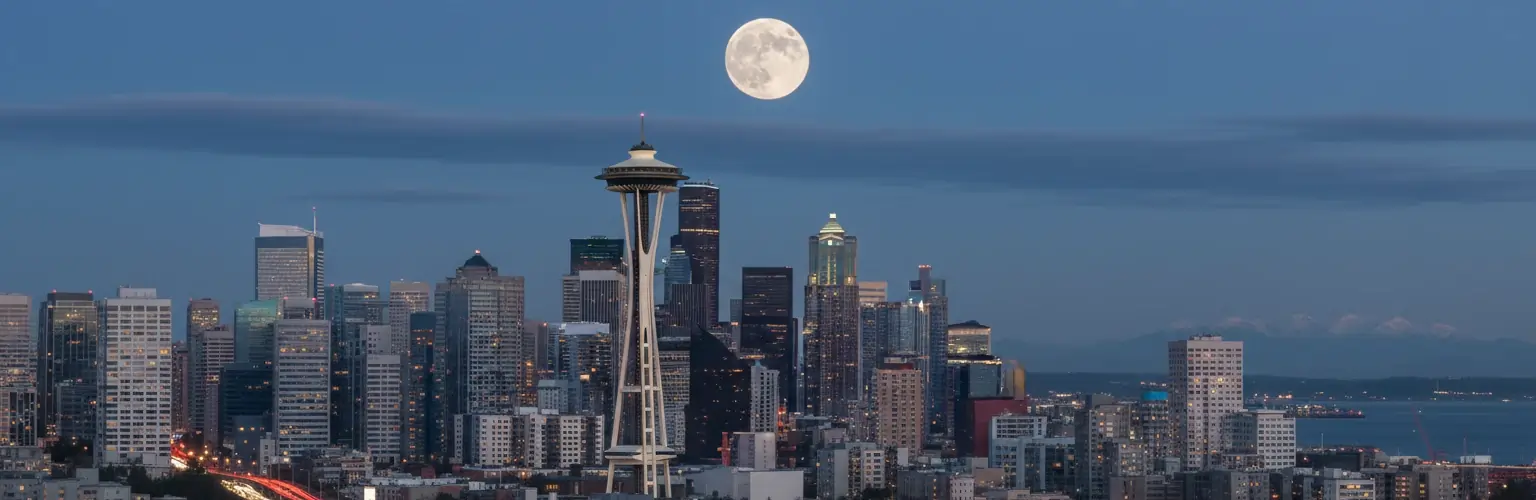
Seattle’s dramatic skyline, Puget Sound, and Olympic Mountains backdrop make moonrises and moonsets here breathtaking when the clouds part. The city rewards photographers who understand its unique blend of urban icons and vast natural landscapes. Depending on the season, the moon can align dramatically with the Space Needle or cast stunning reflections across Puget Sound — use PhotoPills to plan the exact alignment for your chosen date. All spots are free and accessible 24/7 unless otherwise noted.
Kerry Park (Queen Anne Hill)
The undisputed #1 Seattle postcard view. From this iconic viewpoint, looking south, the moon can align dramatically behind the Space Needle and downtown skyline (Columbia Center, Smith Tower). These perfect alignments are rare and seasonal, requiring precise planning; they are not a regular full moon occurrence. The classic view sometimes includes Mt. Rainier in the distance, though clear conditions are needed. Be aware that it gets very crowded on clear nights. Ideal for classic skyline compositions with a wide to mid-telephoto lens.
Gas Works Park – Kite Hill
This wide-open lakefront park offers unique views for moon photography, though typically for the moon's path across the sky or moonsets. Looking south from Kite Hill, the skyline is prominent, offering great compositions with the industrial relics as foreground. While not a primary moonrise location from this angle (as the moon rises behind you), its calm waters can provide stunning reflections of the moon high in the sky. Nearest public transport: bus 31/32. Free and accessible.
Alki Beach Park – West Shoreline (West Seattle)
A long beachfront offering expansive views where the moon rises over Elliott Bay, looking northeast toward the downtown skyline across the water. The long stretch of sand allows for creative telephoto compression shots, making the moon appear massive over the city. Bonfires are allowed on full moon nights, but are subject to local regulations and permits (always check before lighting). Nearest public transport: Water Taxi from downtown. Free and accessible.
Jose Rizal Park / Dr. Jose Rizal Overlook (Beacon Hill)
An elevated south-side viewpoint providing a 180° panorama of the city. From here, the moon rises over the industrial harbor and the downtown cluster. This spot often offers slightly darker skies and fewer crowds than Kerry Park, making it a great alternative for a more peaceful moon viewing experience with excellent wide-angle opportunities. Free and open daily.
Discovery Park – South Beach or West Point Lighthouse
Seattle's largest urban park, a west-facing coastal gem in Magnolia. This location is primarily a stunning moonset spot, offering unparalleled views as the moon descends over Puget Sound with the Olympic Mountains silhouetted. It is not suitable for moonrise photography as it faces west/northwest. Discovery Park is arguably the darkest accessible spot in the city, offering a natural, wild lunar experience. A short hike is required to reach the beach or lighthouse. Free and open daily.
Hamilton Viewpoint Park (West Seattle)
A hidden elevated park in West Seattle offering a unique perspective. The moon rises behind the port cranes and the downtown skyline, providing excellent opportunities for wide-angle shots that can include ferries crossing the frame on Puget Sound. This spot offers easy drive-up access and is generally less crowded than more famous overlooks. Free and open daily.
◉ Best Times for Moon Photography
📷 Quick Photography Tips
Seattle operates on PST (UTC-8) in winter and PDT (UTC-7) during daylight saving time. Clocks go forward on the second Sunday in March and back on the first Sunday in November. Washington state observes DST. Apps like PhotoPills or Stellarium set to Seattle handle the offset automatically — moonrise/moonset times shift by several minutes daily, and planning exact alignments with the city's unique skyline requires precise local time.
For the moon phase in any other city worldwide, visit our Dynamic Moon Phase Calculator for instant lunar data tailored to wherever you are.
The moon phase today in Seattle, WA is shown in detail above — complete with exact illumination percentage, moonrise/set times, and the best local spots to see it. For the moon phase today in any other city or location worldwide, visit our Dynamic Moon Phase Calculator on the home page.
◐ What the Experience Actually Feels Like
There's a palpable sense of anticipation waiting for a moonrise or moonset in Seattle. The city is a masterpiece of light and water, and when the clouds decide to part, the spectacle is truly breathtaking. Imagine standing at Kerry Park, the air crisp, the downtown lights twinkling, and the iconic Space Needle piercing the twilight sky. From this south-facing vantage point, a luminous orb might begin to ascend over the distant Cascade foothills (for moonrise), or descend dramatically over the Olympic Mountains (for moonset), often appearing to align perfectly with the Needle. These precise alignments are rare and seasonal, transforming the familiar skyline into something out of a dream.
Seattle's geography dictates truly dynamic lunar viewing experiences. From Kerry Park, you get that classic postcard view, looking south across the city. Gas Works Park, on Lake Union's north shore, offers unique compositions looking south towards the skyline, where the moon might reflect beautifully in the calm water as it traverses the sky, or set dramatically over the city. Head to Alki Beach, and you're looking northeast across Elliott Bay, with the moon emerging over the sound, framing the entire downtown panorama. For stunning moonsets over the Olympic Mountains, Discovery Park, facing west/northwest, is unparalleled. The interplay of water, mountains, and urban structures means every viewpoint offers a distinctly different, yet equally captivating, lunar vista.
Patience is a virtue in Seattle. The reputation for clouds is well-earned, but when a clear night arrives, especially in the crisp autumn and winter months (October to March), the rewards are immense. These seasons often bring lower humidity and a more southerly moon path, leading to those dramatic alignments with the Space Needle. On truly exceptional nights, a full moon can rise with the snow-capped peak of Mt. Rainier visible to the southeast, or the Olympic Mountains silhouetted across Puget Sound, creating a scene of unparalleled Pacific Northwest grandeur. Spring and summer offer milder temperatures, but with the trade-off of potentially hazier skies.
"A luminous orb might begin to ascend over the distant Cascade foothills, or descend dramatically over the Olympic Mountains, often appearing to align perfectly with the Needle, transforming the familiar skyline into something out of a dream."
✓ Your Seattle Moon Chase Checklist
Before You Go
- Check the moonrise/moonset time and phase on this page — precise timing is crucial for capturing the moon's alignment with Seattle landmarks
- Use PhotoPills (or similar app) to verify if the moon will align with the Space Needle, Mt. Rainier, or other specific features on your chosen date; these are rare events
- Target the 48–72 hour window before full moon for optimal golden/blue hour light, which perfectly balances the moon and city glow
- Monitor Seattle's infamous weather forecast diligently — patience for cloud breaks is often rewarded with unforgettable views
- Scout Kerry Park or your chosen viewpoint during the day — popular spots fill up quickly on clear full moon nights, so plan your position
What to Bring
- Sturdy tripod — the winds off Puget Sound and Lake Union can be significant, making a stable platform essential for sharp long exposures
- A telephoto lens (200-400mm) is highly recommended for dramatic compression shots of the moon with the Space Needle or other skyline elements
- Layers, waterproofs, and warm clothing — Seattle's weather can change rapidly, and exposed viewpoints get cold, even in milder seasons
- A wide-angle lens (e.g., 16–35mm) for expansive shots from Gas Works Park or Discovery Park, incorporating water, mountains, and the city panorama
- Lens cloth and a rain cover — unexpected mist or light rain can appear quickly, and coastal humidity can cause lens condensation
- A headlamp or flashlight for navigating paths in Discovery Park or Gas Works Park after dark, as some areas are unlit
On the Night
- Arrive at your viewpoint 30–45 minutes before moonrise/moonset — the twilight hours over the Puget Sound or Lake Union often provide the most magical light
- At Kerry Park, aim for a composition that includes the Space Needle, downtown skyline, and potentially Mt. Rainier if conditions allow
- Shoot RAW — the extreme dynamic range between a bright moon, city lights, and often dark landscapes requires flexibility in post-processing
- Stay 20–30 minutes after moonrise/moonset — as the moon ascends or descends, its position relative to landmarks shifts, offering different photographic opportunities
- Watch for stunning reflections on calm water surfaces at Gas Works Park or along the waterfronts; these often enhance the moon's glow
? Seattle Moon Phase — Frequently Asked Questions
Q. What is the moon phase today in Seattle?
The moon phase today in Seattle is a New Moon with 0% illumination. The next full moon is in 17 days, on Oct 25. Moonrise is at 6:26 AM and moonset at 6:01 PM.
Q. Where is the best place to view the moon in Seattle?
Kerry Park on Queen Anne Hill is the classic postcard spot, where the moon can occasionally align behind the Space Needle and downtown skyline — though those precise alignments are rare and seasonal, not a regular full-moon event. Alki Beach in West Seattle is a strong alternative for an actual moonrise, with the moon coming up over Elliott Bay toward the downtown skyline, while Jose Rizal Park offers a similar southside panorama with fewer crowds.
Q. Can I watch the moon rise from Discovery Park?
Not really — Discovery Park faces west/northwest toward Puget Sound and the Olympic Mountains, which makes it one of the best spots in the city for a moonset, but it isn't set up to catch the moon coming up. If you specifically want a moonrise, head to an east-facing spot like Alki Beach or Jose Rizal Park instead.
Q. Does Seattle observe daylight saving time?
Yes. Seattle runs on Pacific Standard Time (PST, UTC−8) in winter and switches to Pacific Daylight Time (PDT, UTC−7) from the second Sunday in March to the first Sunday in November. All times shown on this page already account for the correct offset.
Q. What's the best time of year for moon photography in Seattle?
October through March tends to bring the moon onto a more southerly path, producing the tightest alignments with the Space Needle and downtown skyline, and winter clear spells can deliver crystal-sharp skies. Spring and summer are milder to shoot in but come with a higher chance of haze softening the view.
Q. Does this page work for cities besides Seattle?
This page is set up specifically for Seattle, Washington. For the moon phase in any other city or location worldwide, use the Dynamic Moon Phase Calculator on the moonphase.today home page.
✦ Explore Further
Moon Phase Today: Vancouver
Check tonight's moon phase in Vancouver, about 140 miles north across the border.
📷Moon Photography Guide
Camera settings, lenses, and techniques for shooting sharp, well-exposed moon shots.
🌆Blue Hour Calculator
Time your visit to Kerry Park or Alki Beach so moonrise lines up with that golden-to-blue twilight window.
🌝The Moon Illusion, Explained
Why the moon looks so much bigger near the horizon — worth knowing before your Space Needle shot.
NASA Moon Phase & Libration Gallery
NASA's Scientific Visualization Studio's daily renders of the moon's exact phase, libration, and orientation, straight from official mission data.