
Moon Phase Today San Diego
On Friday, October 9, 2026, the moon in San Diego is a New Moon with 0% illumination. Moon age: 28.9 days.
☽ Best Places to View the Moon in San Diego
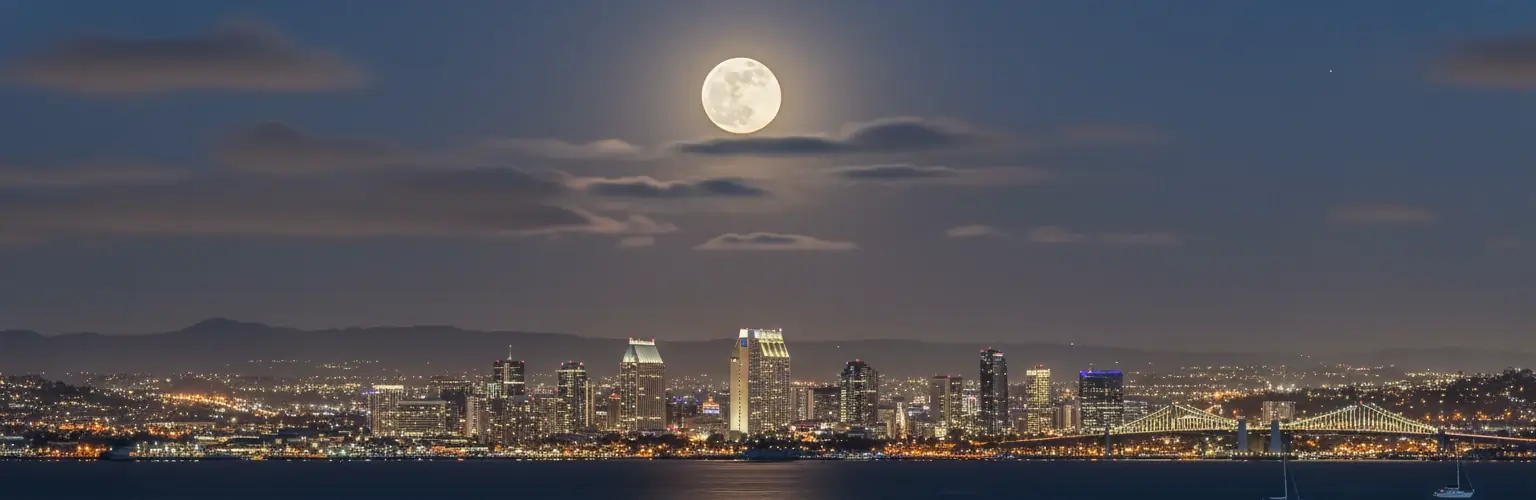
San Diego’s coastal cliffs, expansive harbor, and iconic skyline create truly stunning Pacific moonrises – especially when framed by the graceful curve of the Coronado Bridge or the impressive downtown towers. The city’s unique geography offers diverse perspectives, from elevated historic sites to bustling waterfront promenades. Depending on the season, the moon can rise to align perfectly with a bridge arch or cast a magical glow over the bay. Use PhotoPills to plan the exact alignment for your chosen date and location. All spots are free and accessible 24/7 unless otherwise noted.
Cabrillo National Monument – Bayside Trail or Tidepool Overlook
The #1 San Diego moonrise view. Located on an elevated point (approximately 140m), this historic monument offers an unobstructed eastern horizon. The moon rises majestically straight over San Diego Bay, often silhouetting the downtown skyline (One America Plaza, Manchester Grand Hyatt) beautifully. The historic lighthouse adds a compelling foreground element. Note: The monument itself has specific operating hours and an entrance fee, but the tidepool overlook area can sometimes offer views outside peak times. Verify access before visiting.
Coronado Bridge – East Side Pedestrian Path (near Barrio Logan)
Offers the iconic shot of the majestic, curved bridge. From the east side pedestrian path (accessible near Barrio Logan), the moon rises dramatically behind the arches, with the downtown skyline stretching across the bay. This location provides perfect reflections in the calm bay waters, and a telephoto lens can create striking compression, making the moon appear enormous within the bridge's framework. Public access 24/7, but parking can be limited in the surrounding areas.
Centennial Park – Coronado Waterfront
Located near the Coronado Ferry Landing, this charming park offers quintessential San Diego moonrise views. The moon rises gracefully over the bay, perfectly framing the entire downtown skyline. Picturesque palm trees, moored yachts, and the park's landscaped elements provide excellent foreground interest, while the calm waters deliver very photogenic reflections. Accessible 24/7, with parking available nearby (some paid). A popular spot for both photographers and casual viewers.
Harbor Island – East Tip Promenade
This narrow harbor peninsula provides expansive 180° views across the bay. From the east tip promenade, the moon rises over the water, with the sparkling downtown skyline and the distant airport lights creating a dynamic backdrop. This location is superb for wide-angle shots, capturing the vastness of the bay and the urban glow. The calm bay waters ensure stunning reflections. Accessible 24/7, with plenty of free parking. Excellent for capturing the breadth of San Diego's waterfront.
Sunset Cliffs Natural Park – Cliff Edges near Osprey Point
Offers a dramatic, rugged, and uniquely San Diegan moonrise straight out of the Pacific Ocean. From the cliff edges near Osprey Point, the moon emerges from the vast expanse of the sea, with rugged foreground rocks and crashing waves adding raw natural drama. This spot is best in winter months when the moon's path is more southerly, potentially aligning it with the distant downtown skyline. Exercise extreme caution near cliff edges, especially at night. Free, open daily from dawn till dusk, so plan for twilight or early evening moonrises.
Embarcadero Marina Park South – Pier End
This downtown waterfront park extends into the bay, offering close-up views of the bustling harbor. From the pier end, the moon rises behind the impressive downtown skyline and the iconic USS Midway Museum. The marina boats, convention center lights, and other waterfront elements add fantastic depth and leading lines to your compositions. Accessible 24/7, with paid parking garages nearby. Great for capturing the moon within a vibrant, active urban setting.
◉ Best Times for Moon Photography
📷 Quick Photography Tips
San Diego operates on PST (UTC−8) in winter and PDT (UTC−7) during daylight saving time. Clocks go forward on the second Sunday in March and back on the first Sunday in November. Apps like PhotoPills or Stellarium set to San Diego handle the offset automatically — moonrise times shift by several minutes daily, and planning the exact alignment with the Coronado Bridge or skyline requires precise local time.
For the moon phase in any other city worldwide, visit our Dynamic Moon Phase Calculator for instant lunar data tailored to wherever you are.
The moon phase today in San Diego, CA is shown in detail above — complete with exact illumination percentage, moonrise/set times, and the best local spots to see it. For the moon phase today in any other city or location worldwide, visit our Dynamic Moon Phase Calculator on the home page.
◐ What the Experience Actually Feels Like
There’s an unparalleled sense of grandeur and calm to a San Diego moonrise that truly earns its moniker as "America's Finest City." Imagine standing on the historic grounds of Cabrillo National Monument, the vast expanse of San Diego Bay stretching before you, the downtown skyline a jewel box of lights across the water. As dusk deepens, a luminous orb emerges from the eastern horizon, climbing gracefully above the bay, often perfectly silhouetting the iconic structures like One America Plaza or the Manchester Grand Hyatt. It’s a moment where the city's natural beauty and urban sophistication converge under a celestial spotlight.
San Diego’s coastal and bayfront geography offers a diverse range of moon-chasing experiences. From the gentle curve of the Coronado Bridge, you gaze across the shimmering bay, waiting for the moon to complete the artistic archway with the cityscape. From the charming Centennial Park on Coronado, the scene is softened by palm trees and yachts, the moon and skyline reflected in serene waters. Then there are the raw, untamed views from Sunset Cliffs, where the moon truly rises from the Pacific, a primal glow against the rugged cliffs and crashing waves – a completely different, powerful kind of beauty. The city's light pollution is generally manageable, especially with the vast bay as a buffer, allowing the moon to truly shine.
The seasons play a key role in shaping the San Diego moonrise experience. Late autumn and winter (November through March) often bring the clearest skies and a more southerly moon path, which is ideal for tight alignments with the downtown skyline and the Coronado Bridge. The cooler, crisp air enhances visibility, making lunar details sharp and city lights brilliant. While summer can bring the infamous "marine layer" (coastal fog), it can also create incredibly soft, ethereal light conditions, where the moon might appear to float above a low-lying cloud bank, especially from higher vantage points. The ever-present ocean breeze adds to the coastal atmosphere, sometimes requiring a sturdy tripod but always contributing to the vibrant, fresh feel of a San Diego night.
"As dusk deepens, a luminous orb emerges from the eastern horizon, climbing gracefully above the bay, often perfectly silhouetting the iconic structures. It’s a moment where the city's natural beauty and urban sophistication converge under a celestial spotlight."
✓ Your San Diego Moon Chase Checklist
Before You Go
- Check the moonrise time and phase on this page — critical for aligning the moon with San Diego's iconic coastal cliffs, bridges, or skyline
- Use PhotoPills to verify if the moon will align with your desired landmark (e.g., Coronado Bridge arch, specific downtown tower, or rising from the Pacific) on your chosen date
- Target the 48–72 hour window before full moon for softer, more colorful twilight shots, or the full moon for maximum brightness
- Check marine layer forecasts — coastal fog can add beautiful atmosphere or completely obscure the view; plan accordingly, especially for ocean-facing spots
- Verify access and operating hours for Cabrillo National Monument and Sunset Cliffs Natural Park, as some areas may have curfews or fees
What to Bring
- Sturdy tripod — coastal winds, especially on exposed cliffs and bayfronts, necessitate a stable setup for sharp long exposures
- A telephoto lens (200-300mm+) — ideal for compressing the moon against the Coronado Bridge or making it appear large over the distant skyline from Coronado
- Layers of clothing — even in San Diego's mild climate, evenings by the water or on cliffs can get cool, especially with ocean breezes
- A wide-angle lens (16-35mm) for expansive shots from Harbor Island or Centennial Park, capturing the full sweep of the bay and city lights
- Lens cloth and a rain cover — sea spray and coastal humidity can cause condensation or unexpected moisture on your gear
- A headlamp or flashlight — essential for navigating paths and parking areas in parks and on cliffs after sunset
On the Night
- Arrive at your chosen viewpoint 30-45 minutes before moonrise — this allows ample time to set up and capture the beautiful pre-moonrise light over the Pacific or San Diego Bay
- At the Coronado Bridge pedestrian path, position yourself carefully to align the moon with the bridge's archway or the distant skyline
- Shoot RAW — the extreme dynamic range between a bright moon, the illuminated city, and dark ocean/bay requires flexible files for post-processing and exposure blending
- Stay 20-30 minutes after moonrise — as the moon climbs higher, the light changes, and new compositional opportunities often emerge as it moves above the landscape
- Exercise extreme caution on cliff edges, especially at Sunset Cliffs Natural Park after dark; safety is paramount
? San Diego Moon Phase — Frequently Asked Questions
Q. What is the moon phase today in San Diego?
The moon phase today in San Diego is a New Moon with 0% illumination. The next full moon is in 17 days, on Oct 25. Moonrise is at 5:56 AM and moonset at 5:53 PM.
Q. Where is the best place to view the moon in San Diego?
Cabrillo National Monument gives the widest, most elevated view — the moon rises straight over San Diego Bay with the downtown skyline silhouetted below. The Coronado Bridge's east side pedestrian path offers the classic shot of the moon framed by the bridge's arches, and Sunset Cliffs Natural Park gives a completely different experience: the moon rising straight out of the open Pacific over rugged cliffs.
Q. How does San Diego's marine layer affect moon viewing?
San Diego often gets a "marine layer" — a low bank of coastal fog that can either add a soft, ethereal glow around the moon or block the view entirely, depending on how thick it is. It's most common in late spring and summer, so it's worth checking a coastal weather forecast on top of the regular sky conditions before heading out.
Q. Does San Diego observe daylight saving time?
Yes. San Diego runs on Pacific Standard Time (PST, UTC−8) in winter and switches to Pacific Daylight Time (PDT, UTC−7) from the second Sunday in March to the first Sunday in November. All times shown on this page already account for the correct offset.
Q. What's the best time of year for moon photography in San Diego?
November through March brings the clearest skies and a more southerly moon path, which lines up well with the Coronado Bridge and the downtown skyline. That window also tends to avoid the marine layer that's more common in late spring and summer, so visibility is generally more reliable.
Q. Does this page work for cities besides San Diego?
This page is set up specifically for San Diego, CA. For the moon phase in any other city or location worldwide, use the Dynamic Moon Phase Calculator on the moonphase.today home page.
✦ Explore Further
Moon Phase Today: Anaheim
Check tonight's moon phase in Anaheim, about 95 miles north up I-5.
📷Moon Photography Guide
Camera settings, lenses, and techniques for shooting sharp, well-exposed moon shots.
🌗Why Does the Moon Rise and Set?
The simple science behind moonrise and moonset, and why the timing shifts every day.
🌝The Moon Illusion, Explained
Why the moon looks so much bigger near the horizon — exactly what you'll see rising over the Pacific.
NASA Moon Phase & Libration Gallery
NASA's Scientific Visualization Studio's daily renders of the moon's exact phase, libration, and orientation, straight from official mission data.