
Moon Phase Today Cairo
On Saturday, October 10, 2026, the moon in Cairo is a New Moon with 0% illumination. Moon age: 28.9 days.
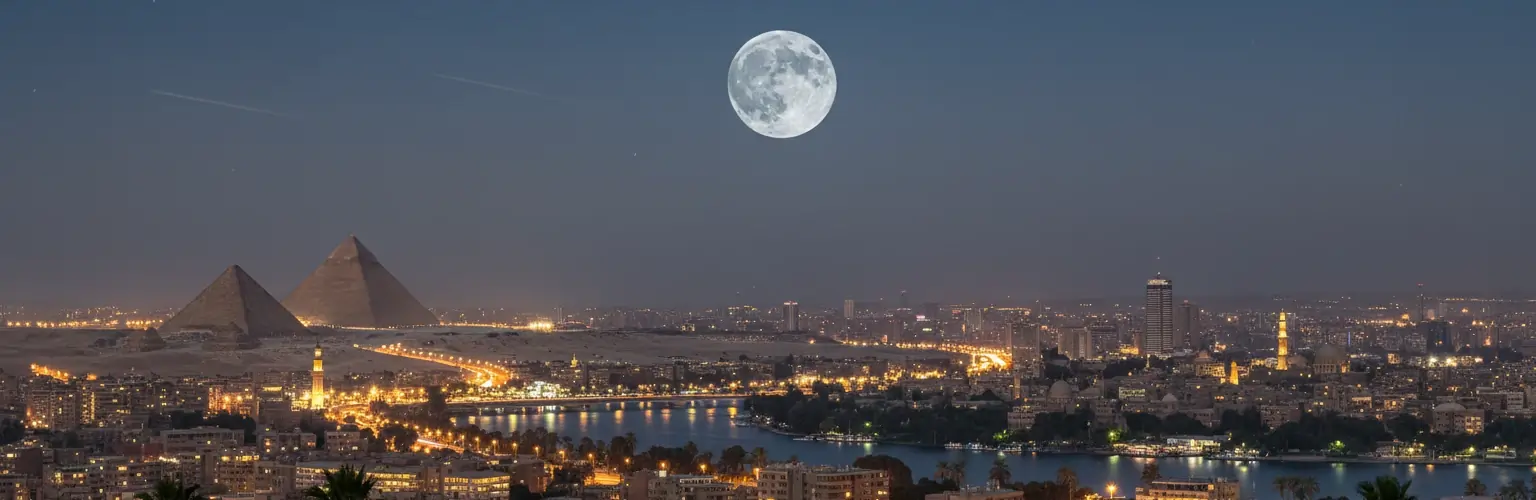
☽ Best Places to View the Moon in Cairo
Cairo sits at 30.0° North, where the lush Nile valley cuts through the vast Sahara desert plateau. The city’s ancient skyline—a dense forest of medieval minarets and limestone monuments—creates one of the world's most dramatic backdrops for moonrise photography. Whether watching the moon ascend over the Citadel of Saladin or catching its silver reflection in the Nile, Cairo rewards the patient observer. Because the city sits on a dusty plain, moonrises here often take on a deep ochre or amber hue before clearing the urban haze. For those seeking the "eternal" shot, the Giza Plateau offers alignments that have captivated humanity for millennia, though these require precise planning to position the lunar disk against the Great Pyramids.
Al-Azhar Park
The absolute #1 Cairo moonrise viewpoint. This elevated park overlooks Islamic Cairo, allowing you to watch the moon rise directly behind the Citadel and the Muhammad Ali Mosque minarets. The panoramic terraces offer a clean horizon compared to the street level. Entry fee applies (~EGP 20–50), and the on-site restaurants provide a safe, comfortable base for long shooting sessions.
Cairo Tower (Gezira Island)
Standing at 187m, this lotus-shaped tower offers the highest 360° perspective in the city. The moon rises over the Nile and the sprawling urban landscape to the east. On clear nights, you can pivot to see the moon illuminate the distant Giza Pyramids to the west. The observation deck is open late; entry for tourists is approximately EGP 200–300.
Salah El-Din Citadel Terrace
The terrace of the Muhammad Ali Mosque provides a historic "city bowl" view. From this vantage point on the Mokattam Hills, the moon tracks over the medieval rooftops and minarets. The architecture itself serves as a perfect foreground, silhouetting the mosque’s massive domes against the lunar light. Check site closing times, as access is usually restricted after sunset unless a special event is held.
Mokattam Hills Corniche
The eastern cliffs of the city offer several staggered overlooks that are popular with locals. Because of the elevation, you get an open eastern horizon, which is ideal for capturing the "Moon Illusion" as it first clears the horizon. It provides a vast view of the city sprawl below. Drive-up access makes it convenient for those with heavy photography gear.
Qasr El Nil Bridge
For a riverside perspective, the promenade near this iconic bridge is unmatched. You can capture the moon rising over the high-rise hotels and the Nile, with the water providing shimmering reflections. The bridge’s lion statues and lamp posts offer great framing elements for urban lunar photography. It is free, accessible 24/7, and captures the vibrant energy of Cairo at night.
Giza Desert Viewpoints
To see the moon rise *behind* the Pyramids, you must be in the desert to the west of the Giza Plateau looking east. Alternatively, many travelers watch the moon rise over the city from Giza rooftop cafes, using the Pyramids as a massive, dark silhouette in the opposite direction. Note that the Giza Plateau itself closes in the evening; most "Pyramid Moon" shots are taken from the desert outskirts or nearby hotels.
◉ Best Times for Moon Photography
📷 Quick Photography Tips
Cairo operates on Eastern European Time (EET, UTC+2) in winter and EEST (UTC+3) in summer. As of 2023, Egypt has reintroduced Daylight Saving Time: clocks go forward on the last Friday of April and back on the last Thursday of October. Apps like PhotoPills or Stellarium handle these shifts automatically for precise moonrise timing.
The moon phase today in Cairo, Egypt is shown in detail below — complete with illumination data, rise/set times, and the best local spots for your chase.
◐ What the Experience Actually Feels Like
Watching the moon rise over Cairo is a sensory overload. From the hilltop of Al-Azhar Park, you aren't just seeing a lunar event; you are witnessing the "City of a Thousand Minarets" transition into the night. As the sun dips behind the Giza plateau to the west, the eastern sky over the Mokattam Hills begins to glow. Because of the dust and desert air, the moon often appears first as a faint, dark orange disc, slowly sharpening as it climbs above the medieval skyline of Islamic Cairo.
The soundscape adds to the magic. If you time your moon chase with the evening call to prayer (Maghrib or Isha), the overlapping voices from hundreds of mosques rise up to meet the moon. The Nile reflects the city's neon lights, but the moon provides a steady, ancient counterpoint to the chaotic traffic below. It is a reminder that while the city is loud and ever-changing, the same moon has looked down upon the Pyramids and the Citadel for centuries.
"The moon rises like an amber ghost over the medieval minarets, casting a silver light that makes the 4,000-year-old limestone of the Pyramids feel almost reachable."
✓ Your Cairo Moon Chase Checklist
Before You Go
- Check the Air Quality Index (AQI) — heavy smog can completely obscure the moon at the horizon; clearer days follow rain or wind.
- Verify DST status — ensure your camera and phone are synced to Egypt’s specific April/October clock shifts.
- Confirm Al-Azhar closing times — the park usually stays open late, but restaurant terraces may require a reservation on full moon nights.
- Check the moon's azimuth — use an app to ensure the moon will actually rise *behind* the Citadel from your chosen park terrace.
What to Bring
- A long telephoto lens (200mm to 600mm) — essential if you want the moon to look large against the Muhammad Ali Mosque or Pyramids.
- A sturdy, weighted tripod — Mokattam and Cairo Tower can be very breezy, and the Nile Corniche has vibrations from heavy traffic.
- Light jacket/scarf — even in summer, Cairo's desert air cools down significantly after dark, especially at elevated spots like Mokattam.
- Lens cleaning kit — the city's dust is pervasive; you'll likely need to wipe your front element several times during a session.
On the Night
- Arrive at Al-Azhar or Cairo Tower at least 45 minutes early — security checks and crowds can eat up your setup time.
- Look for "compression" opportunities — try to align a distant minaret or a palm tree with the rising lunar disk.
- Shoot through the haze — don't be discouraged by a blurry orange moon; the "atmospheric" look is the signature of Cairo photography.
- Be mindful of local customs — while photography is generally welcomed in parks, always be respectful when shooting near mosques or private areas.
? Cairo Moon Phase — Frequently Asked Questions
Q. What is the moon phase today in Cairo?
The moon phase today in Cairo is a New Moon with 0% illumination. The next full moon is in 17 days, on Oct 26. Moonrise is at 6:38 AM and moonset at 6:18 PM.
Q. Where is the best place to view the moon in Cairo?
Al-Azhar Park is the city's signature moonrise spot, with the moon rising directly behind the Citadel and the Muhammad Ali Mosque's minarets. Cairo Tower on Gezira Island gives the highest 360° view, the Mokattam Hills Corniche offers an open eastern horizon, and Qasr El Nil Bridge adds a Nile-side alternative with reflections in the river.
Q. Why does moon visibility change so much in Cairo through the year?
Cairo's desert setting means haze and dust do most of the work: October through March brings the lowest humidity and dust, giving the clearest sky visibility of the year, while the moon often takes on a deep amber or orange hue near the horizon in dustier conditions at other times.
Q. Does Cairo observe daylight saving time?
Yes, but on a different schedule than Europe or North America. Egypt reintroduced DST in 2023: clocks run on EET (UTC+2) most of the year and switch to EEST (UTC+3) from the last Friday in April to the last Thursday in October.
Q. What's the best time of year for moon photography in Cairo?
October through March offers the lowest humidity and dust for the clearest, sharpest moonrises over the Citadel and the Nile. Whatever the season, expect the moon to appear deep orange near the horizon before it clears the haze — a look many photographers lean into rather than fight.
Q. Does this page work for cities besides Cairo?
This page is set up specifically for Cairo, Egypt. For the moon phase in any other city or location worldwide, use the Dynamic Moon Phase Calculator on the moonphase.today home page.
✦ Explore Further
Moon Phase Today: Amman
Check tonight's moon phase and best viewpoints in Amman, about 420 km north-east of Cairo.
📷Moon Photography Guide
Camera settings, lenses, and techniques for shooting sharp, well-exposed moon shots.
📐Looney 11 Exposure Calculator
Dial in the exact f-stop, ISO, and shutter speed for a full moon — the same rule used in our Citadel tips.
🌆Blue Hour Calculator
Find tonight's exact blue hour window to time your Al-Azhar Park moonrise shots.
NASA Moon Phase & Libration Gallery
NASA's Scientific Visualization Studio's daily renders of the moon's exact phase, libration, and orientation, straight from official mission data.